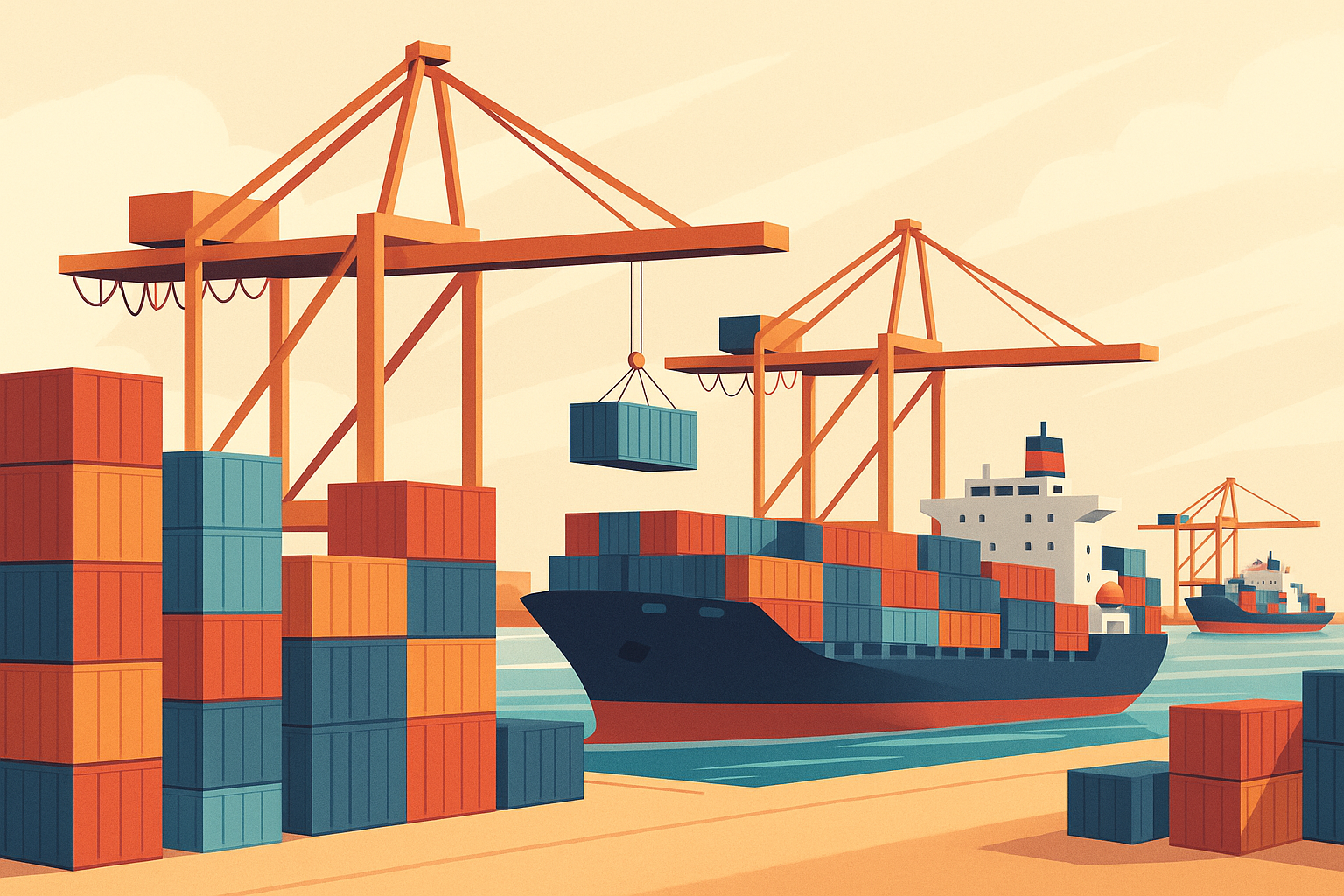
China has posted a record-breaking trade surplus exceeding $1 trillion South China Morning Post, fueled by a resurgence in exports despite ongoing geopolitical tensions and Western trade barriers. The milestone highlights both the resilience of China’s manufacturing engine and the mounting structural risks facing global supply chains.
The Anatomy of an Export Juggernaut
China’s annual trade surplus exceeded $1 trillion for the first time Bloomberg, with the country’s customs administration reporting that the surplus for the first eleven months of 2025 reached $1.076 trillion South China Morning Post—already surpassing the previous full-year record of $992 billion set in 2024 Yahoo Finance. In November alone, exports returned to growth after an unexpected drop the previous month, rising 5.9% from a year earlier and far outpacing a 1.9% gain in imports Bloomberg. The single-month surplus of $112 billion marked the third-largest ever accumulated by China Bloomberg.
The export rebound has been powered by what Chinese officials call the “new three” industries: electric vehicles, batteries, and solar equipment. In the first seven months of 2025, China’s exports of these sectors surged to over $120 billion OilPrice, reflecting rising volumes even as unit prices declined due to overcapacity. EV exports jumped 26% from January through August compared to the same period in 2024, while battery exports rose 23% Electrek. China now produces around 80% of the world’s solar PV modules and battery cells, and 70% of electric vehicles Ember.
Traditional electronics and machinery continue to form the backbone of Chinese exports, but it is the clean-tech sector that has emerged as the strategic growth driver. Despite falling prices—solar panel prices have plunged more than 80% over the past decade—China set a new record for clean tech exports in August 2025, hitting $20 billion Electrek. The combination of technological advancement, integrated supply chains, and aggressive pricing has made Chinese manufacturers nearly unassailable in these critical sectors.
Currency dynamics have also played a role in boosting export competitiveness. China’s real effective exchange rate has fallen by close to 20 percent over the last three years Council on Foreign Relations, due to yuan depreciation against the dollar since 2022 and persistent domestic deflation. While Chinese authorities have maintained relative stability against the dollar, the yuan’s weakness against other major currencies—including the euro and pound—has enhanced price competitiveness in non-U.S. markets.
Geopolitical Dimensions and Market Diversification
Perhaps the most striking feature of China’s trade surplus expansion is its geographical breadth. China now exports more goods to almost 170 countries and economies than it buys from them, the most since 2021 Fortune. This diversification strategy has proven essential as exports to the United States—long China’s largest export market—have declined sharply. Shipments to the United States sank 28.6 percent in November Homenewshere.com, yet total exports continued to surge.
The geographic reorientation is particularly evident in Southeast Asia and emerging markets. The surplus with the 10 Southeast Asian nations in Asean jumped almost 36% Fortune compared to the previous year, while the surplus with the European Union increased 9.6% Fortune. More than half of the growth in China’s EV exports came from outside the OECD, with exports to the ASEAN region rising 75% in January-August 2025 Ember.
Africa, though from a lower base, has seen explosive growth. Chinese EV exports to the region in January-August 2025 were almost triple those in January-August 2024 Ember. Indonesia has emerged as a particularly important market, becoming the 9th largest EV market globally this year Ember.
This export diversification reflects both strategic planning and necessity. With the United States imposing tariffs and the European Union implementing duties of up to 45% on Chinese electric vehicles, Chinese manufacturers have actively sought alternative markets. The strategy appears to be working: Capital Economics analyst Zichun Huang notes that weakness in exports to the United States was more than offset by shipments to other markets Homenewshere.com.
Domestic Weakness Drives External Dependence
The record trade surplus reflects not only export strength but also import weakness—a symptom of profound domestic economic challenges. Imports have been dragged down by sluggish domestic consumption and falling commodity prices Yahoo Finance. The November import growth of only 1.9% underscores the persistent weakness in domestic demand that has plagued China’s economy.
China’s property sector crisis, which began in 2021, continues to weigh heavily on household confidence and consumption. With real estate investment declining and property prices falling in most major cities, Chinese households have become increasingly risk-averse. This has created a paradox: China’s massive manufacturing capacity faces limited domestic absorption, forcing an ever-greater reliance on external markets.
Zhiwei Zhang, president and chief economist at Pinpoint Asset Management, observed that the rebound of export growth in November helps to mitigate the weak domestic demand, though economic momentum slowed in the fourth quarter partly driven by the continued weakness in the property sector Homenewshere.com. Exports accounted for nearly a quarter of the economy’s expansion in 2024 Yahoo Finance, underscoring how critical external demand has become for maintaining growth targets.
Beijing’s policy response has focused on supply-side measures—supporting manufacturers and export sectors—rather than demand-side stimulus that might address the root causes of weak consumption. This approach, while maintaining industrial output and employment in export sectors, perpetuates the structural imbalances driving the massive trade surplus.
Global Market Implications and Rising Tensions
The expanding trade surplus has generated significant ripple effects across global markets. Asian equity markets have reacted nervously to the prospect of increased trade tensions, while commodity exporters face headwinds from China’s weak import demand. For countries competing with China in manufacturing—from Vietnam to Mexico to Turkey—the combination of Chinese overcapacity and competitive pricing poses serious challenges.
The trade imbalance has also intensified diplomatic friction. French President Emmanuel Macron threatened in remarks to impose tariffs on China if Beijing fails to reduce its massive trade surplus with the European Union, warning that Europeans will be forced to take strong measures in the coming months Homenewshere.com. India, facing a $77.7 billion trade deficit with China in the first eight months of 2025—16% higher than the same period last year CNBC—has urged BRICS members to address trade imbalances.
The return of Donald Trump to the White House in January 2025 has added further uncertainty. Trump’s threats of 60% tariffs on Chinese goods have prompted what analysts call “front-running” behavior, with companies in the US buying more from China in advance to get ahead of any new levies Yahoo Finance. This partially explains the December export surge to the U.S., which rose to the highest in more than two years, hitting almost $49 billion Yahoo Finance.
However, economists warn this boost may be temporary. Kelvin Lam, senior China economist at Pantheon Macroeconomics, cautioned that with rising external uncertainty over trade policies of the incoming Trump administration, China’s export growth is likely to face severe challenges this year Yahoo Finance.
Policy Crossroads: Balancing Growth and Global Backlash
Beijing faces a delicate balancing act. The export sector’s strength has been crucial for maintaining economic growth amid domestic headwinds, yet the massive trade surplus risks provoking coordinated international retaliation. The International Monetary Fund has noted that China’s 2024 cyclically adjusted current account surplus was 2.0% of gross domestic product, exceeding its norm by 1.2 percentage points OMFIF, suggesting significant currency undervaluation.
Some economists argue China needs fundamental reorientation. As Brad Setser of the Council on Foreign Relations noted regarding earlier data, with Chinese export prices still falling, export volume growth was enormous Fortune. This combination of volume growth and price deflation suggests deep structural overcapacity that cannot be sustained without either domestic demand recovery or international pushback.
Chinese policymakers have acknowledged the overcapacity challenge, with Premier Li Qiang addressing the issue in his 2024 Government Work Report. However, concrete policy shifts have been limited. The State Council has announced measures to provide financial support to export industries, but demand-side reforms—such as major fiscal transfers to households or comprehensive property market stabilization—remain inadequate relative to the scale of domestic imbalances.
Outlook: Sustainability Questions and Medium-Term Risks
The sustainability of China’s record trade surplus faces three major challenges. First, geopolitical fragmentation is accelerating. Beyond the U.S. and EU, an increasing number of countries are implementing tariffs or non-tariff barriers against specific Chinese products, from steel to electric vehicles to solar panels.
Second, onshoring and “friend-shoring” trends in advanced economies are gaining momentum. The COVID-19 pandemic and subsequent supply chain disruptions convinced many Western policymakers and corporate executives that excessive dependence on Chinese manufacturing poses strategic risks. While reshoring high-volume, low-margin manufacturing is difficult, the long-term trajectory points toward gradual supply chain diversification.
Third, the global political backlash against what is perceived as Chinese industrial overcapacity may intensify. With China now running surpluses with nearly 170 economies, the number of countries with political constituencies harmed by Chinese competition has grown substantially. This creates a potential for coordinated action that could significantly constrain Chinese exports.
The IMF’s recent upgrade of China’s growth forecast to 4.8% for 2025 reflects confidence in near-term export resilience, but medium-term prospects remain clouded by these structural headwinds. If Trump follows through on tariff threats and other countries implement similar measures, China could face a sharp deterioration in its external environment just as domestic demand remains weak.
Conclusion: Strength and Vulnerability in Parallel
China’s $1 trillion trade surplus represents both a testament to its manufacturing prowess and a symptom of profound economic imbalances. The combination of technological advancement in strategic sectors, integrated supply chains, competitive pricing, and successful market diversification has enabled Chinese exporters to maintain momentum despite rising trade barriers in key Western markets.
Yet this achievement comes with significant vulnerabilities. The dependence on external demand masks unresolved domestic economic challenges—particularly weak consumption and the ongoing property crisis. The surplus’s sheer magnitude has made China a target for trade policy backlash across both advanced and emerging economies, risking a coordinated response that could severely constrain future export growth.
For investors and policymakers globally, the key variables to monitor include: Beijing’s willingness to implement meaningful demand-side stimulus; the scale and timing of Trump administration tariffs; the extent of multilateral coordination on trade policy toward China; and signals of structural adjustment in Chinese industrial policy. The interplay of these factors will determine whether the record surplus represents a sustainable new normal or an unsustainable imbalance heading toward correction.
What remains clear is that China’s export engine, while powerful, operates in an increasingly hostile global environment. The era of frictionless Chinese export expansion has ended; what comes next will depend on how both Beijing and its trading partners navigate the tensions between economic interdependence and strategic rivalry.