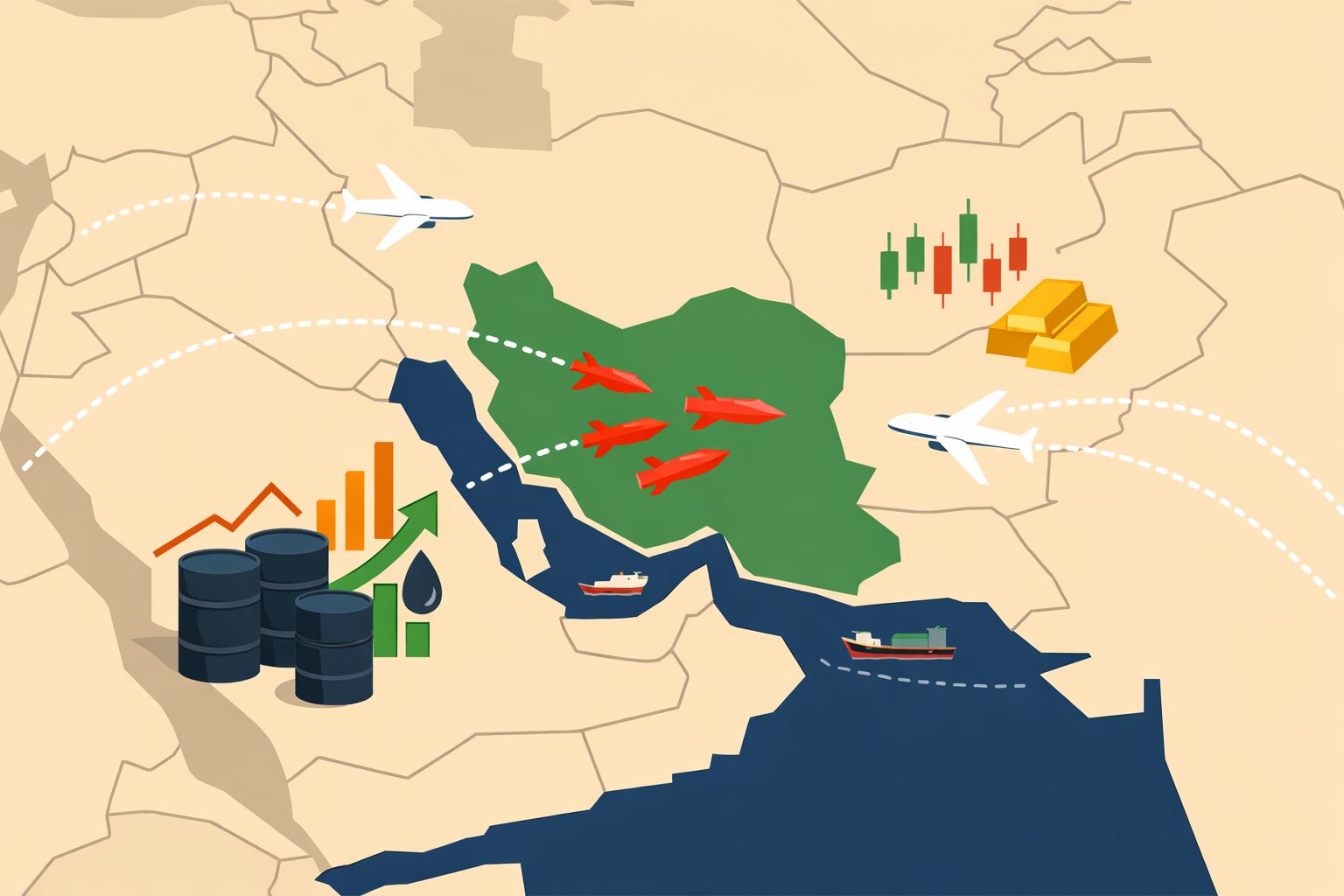
Trump’s Iran Strikes Escalate: What It Means for Oil, Markets, and Global Stability
President Donald Trump’s recent declaration that U.S. strikes on Iran will continue “until objectives are met” has fundamentally shifted the calculus in the Middle East. What initially appeared to be a localized exchange of fire has rapidly evolved into a sustained military campaign. For global markets, this is no longer a “headline flash” to be ignored after a few trading sessions. It is a structural shift in geopolitical risk that threatens to re-anchor oil prices, disrupt global logistics, and complicate the delicate “soft landing” narratives of Western central banks.
The Shift from Deterrence to Objective-Based Warfare
The ambiguity of the term “objectives” is perhaps the most unsettling element for policy analysts. In past administrations, strikes were often framed as “proportional responses” designed to restore deterrence. Trump’s phrasing suggests a shift toward a mission-driven campaign. Whether these objectives involve the total degradation of Iran’s ballistic missile program, the dismantling of regional proxy networks, or forcing a fundamental change in Tehran’s nuclear stance remains unclear.
Military developments on the ground confirm this expansion. Following Trump’s announcement, the theater of operations has widened. Reuters reports that Israel has intensified strikes on Hezbollah positions in Lebanon, effectively merging the U.S.–Iran confrontation with the ongoing northern border conflict. This multi-front escalation means the “firebreak” that previously kept these conflicts separate has vanished.
Travel Chaos and the Logistics Bottleneck
The immediate civilian fallout is already visible in the aviation sector. As the conflict widens, major hubs across the Middle East are facing rolling closures. Travel chaos has worsened as Iran and neighboring states shut down airspace to avoid the risk of accidental shoot-downs—a haunting echo of past tragedies in the region.+1
For international business, this isn’t just about delayed flights. The rerouting of air cargo between Europe and Asia adds significant time and fuel costs, placing immediate upward pressure on supply chain expenses. Logistics firms are being forced to navigate a shrinking corridor of safe passage, a situation that hasn’t been this dire since the peak of the 1980s “Tanker War.”
Oil Markets: The 20% Sensitivity
The primary transmission channel for this conflict remains the energy market. Crude prices have already begun to bake in a “war premium,” but the real concern lies in physical supply disruption.
- The Hormuz Factor: Approximately 20% of the world’s total oil consumption passes through the Strait of Hormuz.
- The Price Impact: Historically, a sustained $10 increase in the price of oil can shave roughly 0.2 to 0.5 percentage points off global GDP growth while adding a similar amount to headline inflation.
While the U.S. is now a net exporter of energy, global pricing remains interconnected. Brent and WTI levels are reacting not just to the strikes themselves, but to the fear of Iranian retaliation against regional energy infrastructure—specifically the desalination plants and refineries of the Gulf monarchies. Unlike the drone strikes of 2019, a sustained U.S. campaign suggests that any Iranian response would likely be more desperate and less predictable.
Inflation and the Central Bank Dilemma
For the Federal Reserve and the European Central Bank (ECB), this escalation arrives at the worst possible moment. After two years of fighting post-pandemic inflation, central banks were finally signaling a pivot toward rate cuts.
A persistent energy shock could flip that script. Energy-driven inflation is “cost-push” inflation, which is notoriously difficult for central banks to manage. If they raise rates to fight energy costs, they risk crushing an already cooling economy. If they ignore it, they risk de-anchoring inflation expectations.
In the immediate term, we are seeing a classic “flight to safety.” The U.S. dollar, gold, and the Swiss franc are catching bids as investors rotate out of riskier assets. Gold, in particular, is reclaiming its status as the ultimate hedge against geopolitical disorder.
Market Rotation: Winners and Losers
The equity markets are already beginning to sort the winners from the losers in this “new normal”:
- Defense and Aerospace: Shares in major defense contractors (e.g., Lockheed Martin, Northrop Grumman) have seen a sharp uptick. Trump’s commitment to a sustained campaign implies long-term procurement and replenishment of munitions.
- Airlines and Tourism: Conversely, the “travel chaos” reported by Reuters is hitting airline stocks hard. Higher jet fuel prices combined with the logistical nightmare of closed airspaces make for a grim quarterly outlook.
- Emerging Markets: Countries dependent on oil imports (like India and parts of Southeast Asia) are seeing their currencies weaken against the dollar, raising the specter of imported inflation and capital flight.
Diplomatic Scenarios and Risk Realities
What would de-escalation even look like at this stage? European allies are currently in a difficult position, caught between their reliance on the U.S. security umbrella and their desire to maintain regional stability to prevent a new migration crisis.
| Scenario | Likelihood | Impact |
| Limited “Tit-for-Tat” | Moderate | Temporary volatility; oil stays in the $85–$95 range. |
| Regional Infrastructure Hits | Low-Moderate | Severe supply shock; oil could breach $120. |
| Diplomatic Breakthrough | Low | Massive “risk-on” rally; gold prices retreat. |
The most likely path, however, is a prolonged strike cycle. This involves a high-frequency, low-intensity conflict where the U.S. continues to degrade Iranian assets while Iran utilizes its proxies to keep the U.S. off balance.
Final Observations
The market hates uncertainty more than it hates bad news. Trump’s “until objectives are met” statement provides a clear direction—escalation—but leaves the destination unknown. As long as the “objectives” remain undefined, the geopolitical risk premium will remain a permanent fixture of the global macro landscape. Investors should prepare for a period where volatility is not an outlier, but the baseline. The transition from a global economy focused on “growth and easing” to one dominated by “energy security and defense” is no longer a theory; it is currently unfolding in the skies over the Middle East.
Would you like me to prepare a more specific technical analysis of how the defense sector and oil-weighted ETFs are performing relative to the S&P 500 since the announcement?