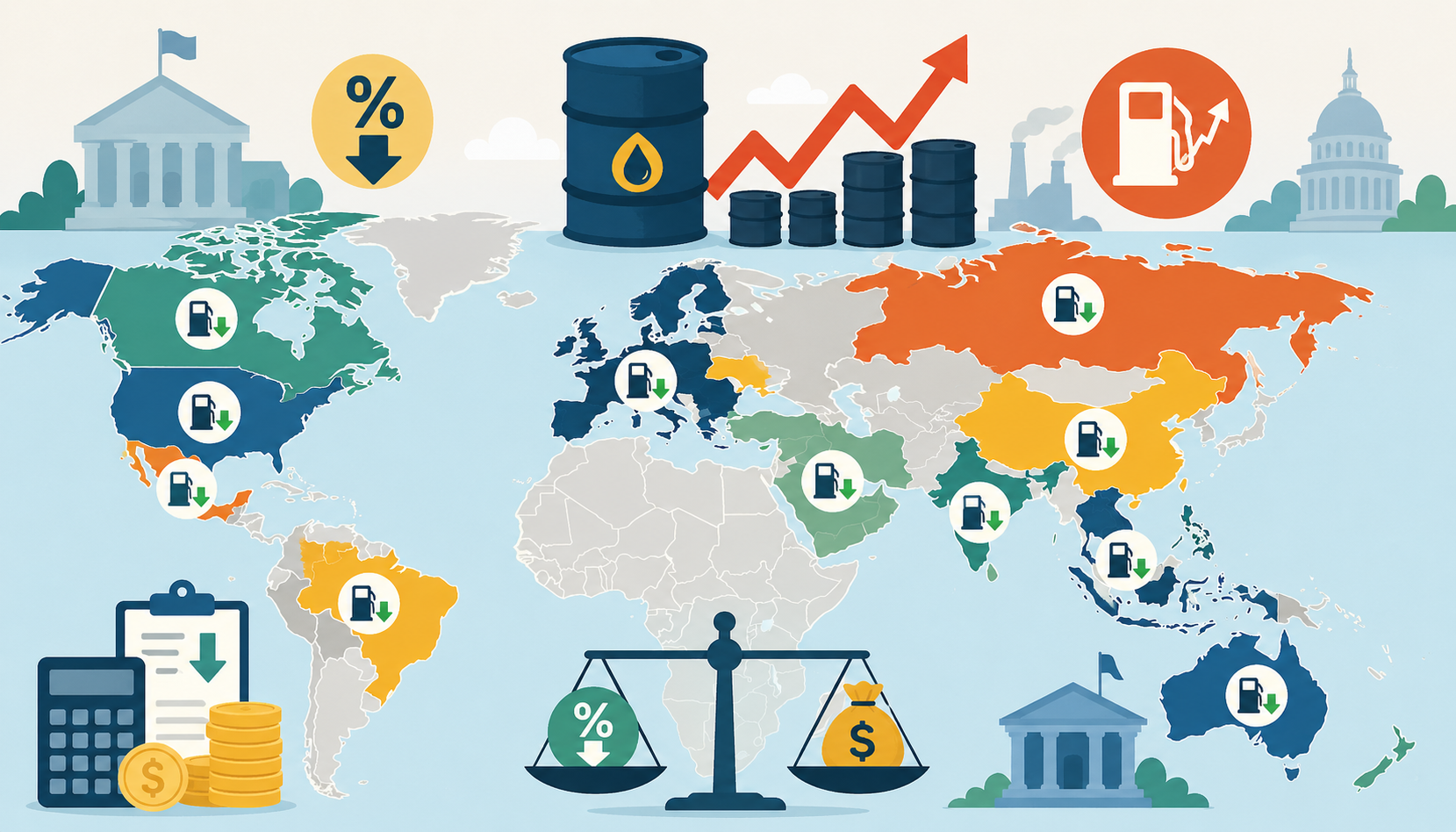
The defining policy reflex of the 2026 oil shock is now visible in the data: cut taxes, cap prices, and absorb the difference on the public balance sheet. Roughly 30 to 40 economies have moved on fuel taxes alone since the conflict in the Middle East began on 28 February, and the broader policy footprint is far larger. The IEA’s Energy Crisis Policy Response Tracker, alongside parallel monitoring by E3G and Carbon Brief, has logged nearly 200 separate measures from around 60 national governments — tax reductions, subsidies, price caps, retail margin controls, and demand-restraint orders — most of them announced inside a single eight-week window.
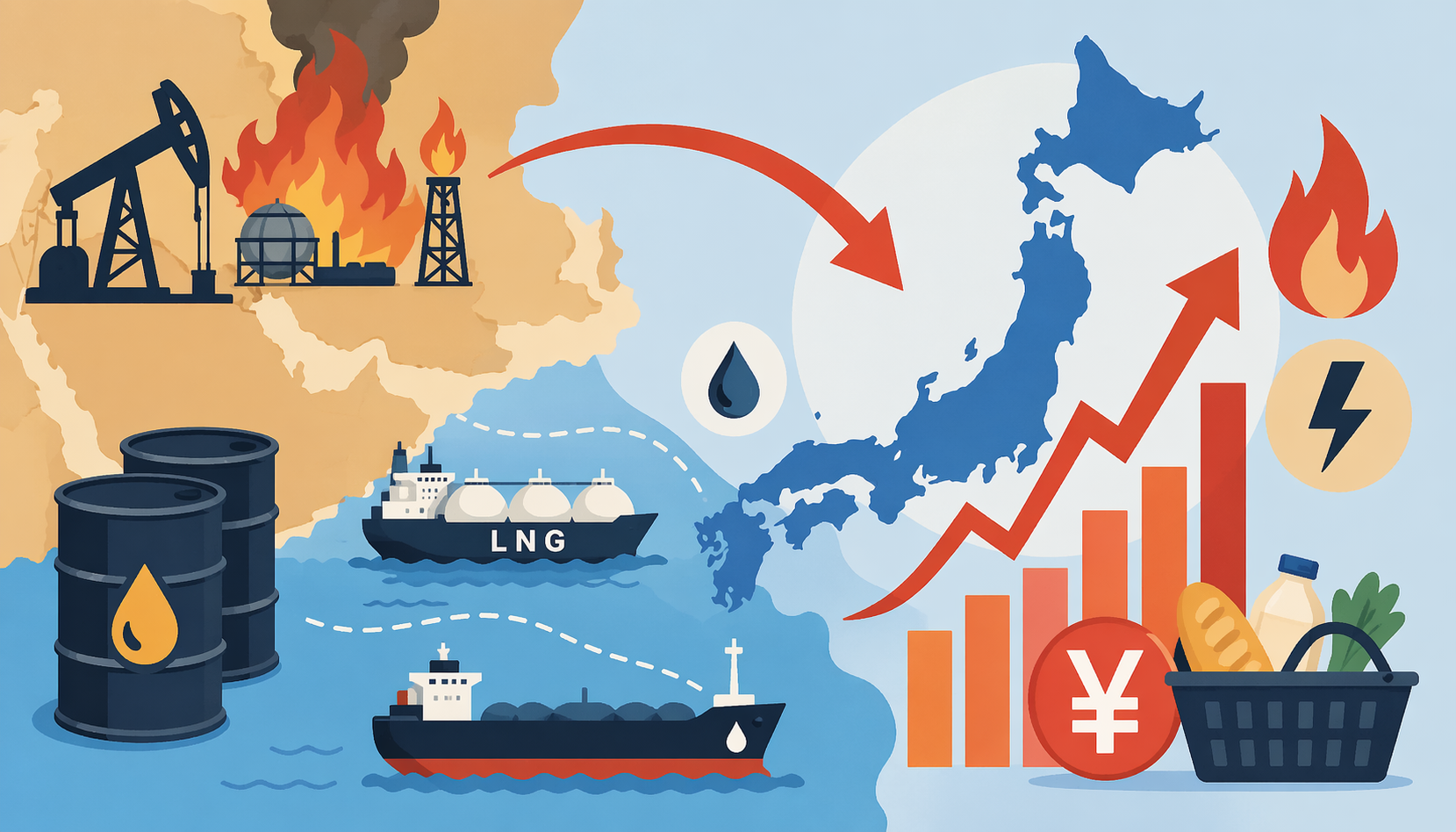
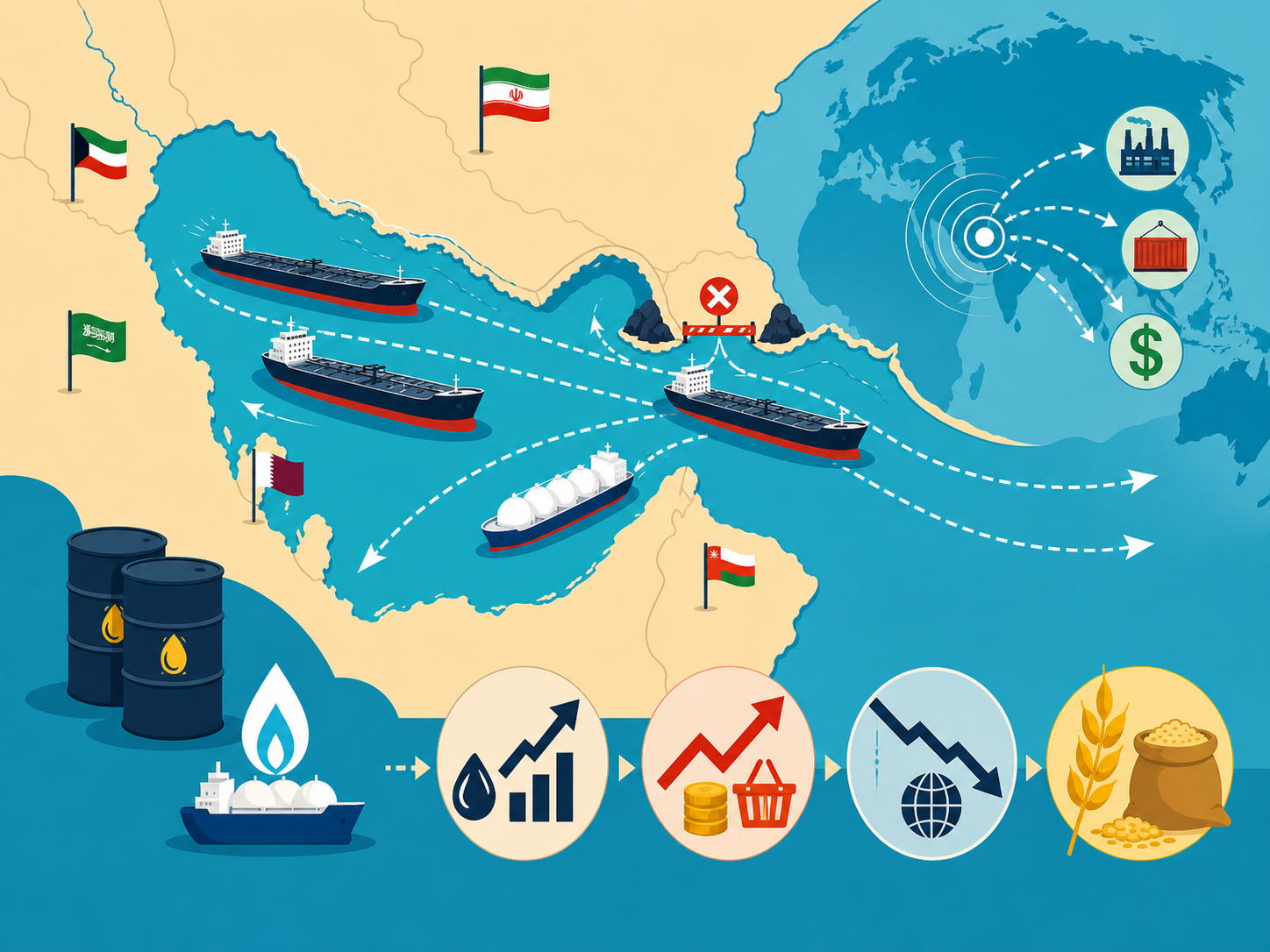
The scale of the underlying shock explains the speed. Brent crude has risen roughly 50 percent above pre-war levels, briefly trading above $118 a barrel before easing on the temporary ceasefire announced 8 April. Dutch TTF gas has gained more than 60 percent since late February. Crude and product flows through the Strait of Hormuz collapsed from about 20 million barrels a day before the war to just over 2 million in March, which the IEA has called the largest supply disruption in the history of the global oil market. Diesel and jet fuel benchmarks in Asia more than doubled at one point in March. None of this is a slow burn; it is a step-change that governments have to absorb in real time.
Why governments cut first and ask questions later
The political logic is straightforward. Fuel prices feed into headline inflation faster and more visibly than almost any other input, and household budgets feel the increase within days at the pump. Faced with that, finance ministries have reached for the instruments they can deploy in 24 to 48 hours: excise cuts, VAT reductions, pump price caps, targeted vouchers, and increased compensation to state-owned energy distributors.
The mix varies by region but the pattern is consistent. Germany has rolled out a temporary fuel tax cut worth about €1.6 billion. Poland has cut VAT on fuel from 23 percent to 8 percent and floated windfall taxes on energy companies if profits run hot. Sweden has paired tax reductions with direct cash payments. Spain has combined fuel tax cuts with energy-efficiency tax breaks. Serbia has imposed both price caps and tax cuts. Outside Europe, the picture is heavier on direct subsidy: Indonesia has earmarked an additional 100 trillion rupiah — about $5.9 billion on top of $22.3 billion already budgeted — to keep subsidised petrol at $0.60 a litre and subsidised diesel at $0.40 even as Brent traded near $118. Malaysia’s monthly fuel subsidy bill jumped from RM700 million to RM3.2 billion in a single week. New Zealand introduced a $50-per-fortnight tax credit for working families with children. Zimbabwe is scrapping selected fuel import taxes and lifting the ethanol blend in petrol from 5 to 20 percent. The headline figure of roughly 39 economies on tax cuts specifically understates how broad the response actually is once subsidies and price caps are added in.
Policymakers know the risks. They are doing it anyway because the alternative is a politically uncontrolled pass-through to households at a moment when public finances, central banks, and electorates are already under strain.
The fiscal arithmetic is brutal
The fiscal cost of broad-based price relief is the part that does not show up in the first month’s headlines, and that is precisely where comparisons with previous shocks become uncomfortable. During the 2022 energy crisis, governments globally spent roughly $940 billion on direct grants, vouchers, and tax reductions, of which only about a quarter was targeted at the households most exposed to price shocks. The IEA’s commentary published 21 April makes the point bluntly: most short-term energy interventions since 2022 have not been targeted, and an estimated 70 percent of a broad-based fuel excise cut in the Netherlands flowed to middle-high and higher-income households rather than to the lowest deciles.
The current episode starts from a worse fiscal baseline. Indonesia’s deficit had already reached close to 1 percent of GDP by March, and the finance minister has acknowledged it could hit 3.6 percent if oil averages $92 a barrel for the year — above the 3 percent legal ceiling. Both Moody’s and Fitch had assigned Indonesia a negative outlook before the shock. Within the EU, 22 member states have introduced more than 120 uncoordinated measures costing in excess of €9 billion, according to a Jacques Delors Institute count, and the Commission has explicitly warned against a “subsidy race” that would undermine fiscal discipline and the single market simultaneously.
Sovereign credit signals are not at panic levels, but the direction is clear. Energy-importing emerging markets — Pakistan, Bangladesh, Egypt — are under the most acute strain because the shock simultaneously hits the budget, the current account, and the currency. Bangladesh now faces recession-like conditions, with universities closed early for Eid al-Fitr to conserve power. Asian currencies have weakened against the dollar across the board since late February — the rupiah, ringgit, baht, peso, and dong have all slipped — compounding the local-currency cost of every imported barrel.
Inflation suppressed today, prolonged tomorrow
The cleanest argument against broad fuel tax cuts is the one central banks have been making since 2022: capping the price of a scarce input weakens the demand signal that would otherwise help clear the market. Marcel Fratzscher, president of the German Institute for Economic Research, has warned that a meaningful share of Germany’s fuel tax cut is likely to flow to oil companies rather than to consumers. Stefan Kooths of the Kiel Institute has called the expectation that fiscal action can shield households from a real terms-of-trade shock “an illusion” — higher oil prices erode purchasing power regardless of whether the loss shows up at the pump or in the budget.
For monetary policy, the result is a familiar bind. Headline inflation prints lower in the near term thanks to the tax cuts, but core measures stay sticky as the second-round effects work through transport, food, and services. The ECB and the Bank of England are now widely expected to delay easing relative to the path priced before late February. Several Asian central banks are keeping rates higher than growth conditions would otherwise justify in order to defend their currencies. Bank Indonesia is the textbook case: prioritising rupiah stability through tighter conditions even as growth slows, with FX intervention reducing usable reserves to roughly two-thirds of headline gross reserves. The fiscal and monetary arms are pulling in opposite directions, and the energy tax cuts are the friction point between them.
Markets and the transition question
Bond markets have so far been orderly but selective. Spreads on the most fiscally exposed sovereigns have widened modestly; where the response is being read as temporary and targeted — Sweden, parts of northern Europe — the market reaction has been muted, while open-ended packages are starting to rebuild a premium. The Commission’s crisis state aid framework, scheduled for 22 April, is in part an attempt to prevent fragmented European responses from blowing through both the fiscal rules and the climate framework at once.
The transition cost is the part that gets the least airtime and may matter most over a five-year horizon. The IEA’s State of Energy Policy 2026 notes that government energy spending is now likely to remain elevated through 2030, and that emergency affordability measures historically crowd out targeted incentives for efficiency and electrification. Cutting the price of fossil fuel today weakens the EV economic case and lowers the return on heat pump investment for the household running the numbers this year. The renewable and nuclear policy stack remains in place — 150 countries have active deployment policies as of April 2026 — but the marginal incentive is moving the wrong way. Japan, Italy, and South Korea are leaning more heavily on coal in the short term. Indonesia, the world’s largest coal exporter, is prioritising domestic supply over exports.
What to watch next
A handful of indicators will tell us whether the current package is sustainable or whether a second wave of measures is coming. Brent’s path through the summer is the obvious one — analyst forecasts of $100-plus if Hormuz disruption persists translate into roughly 0.8 percentage points on global inflation and another leg of fiscal cost everywhere subsidies are open-ended. Indonesia’s deficit ceiling is a stress test for emerging-market policy credibility; a breach would matter beyond Jakarta. The European Commission’s coordination push, the timing of ECB and BOE rate decisions, and any move by major economies to phase out broad measures in favour of targeted transfers will define whether the lesson of 2022 — that untargeted relief is expensive, regressive, and slow to unwind — has actually been internalised.
The 39-economy headline captures something real about how synchronised the policy reflex has become. What it does not capture is the harder question now in front of every finance ministry on that list: how to withdraw the relief without triggering the political crisis the relief was designed to prevent. That answer will shape fiscal trajectories, inflation paths, and the credibility of the energy transition for the rest of this decade.