The oil market is not just reacting to another geopolitical headline. The IEA’s warning that crude could enter a summer “red zone” points to a more uncomfortable mix: restricted flows through the Strait of Hormuz, shrinking inventories, peak fuel demand, and a policy toolkit that may be less powerful than markets assume.
Why the IEA warning matters now
Speaking at Chatham House in London on May 21, the head of the International Energy Agency put a date on the danger. “We may be entering the red zone in July or August if we don’t see that there are some improvements in the situation,” Fatih Birol said, in reference to the oil supply crisis brought about by the Iran war. Yahoo!
He deliberately left the term undefined. Birol did not elaborate on what exactly a ‘red zone’ would look like — and that ambiguity is part of the point. This is not a price target. It is a warning about the physical market: whether enough barrels actually arrive at refineries, whether emergency reserves still have depth, and whether traders continue to believe a buffer exists. Yahoo!
The timing is not arbitrary. The IEA chief tied the risk to the start of peak summer fuel demand, the lack of new oil exports from the Middle East, and depleting stocks. Northern Hemisphere driving and flying season collides, in other words, with a supply system already running on stored barrels. Yahoo!
The Strait of Hormuz as the central pressure point
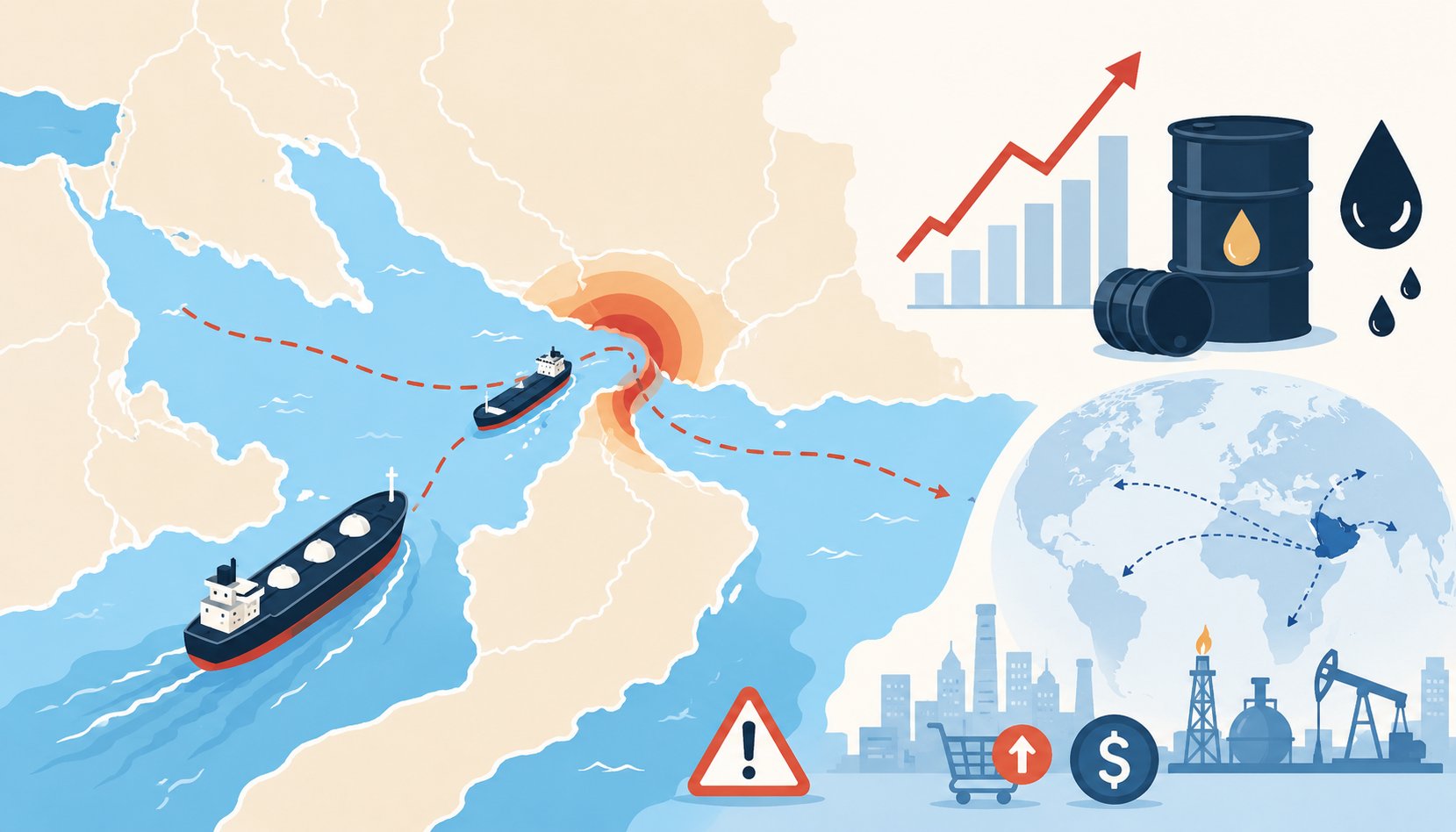
The Strait of Hormuz is the narrow waterway connecting the Gulf to the open ocean — the route through which a large share of seaborne crude, refined products, and LNG normally passes. When it is choked, there is no quick substitute at scale.
Chatham House framed the crisis in terms that go well beyond a price chart. The effective closure of the Strait, it noted, has thrust the global energy system into acute crisis, with repercussions extending far beyond surging oil and gas prices: flight cancellations are mounting, fuel rationing is being introduced, and governments are rapidly revising fiscal plans to shield consumers and economies from shock. Chatham House
That is the useful way to read this. The story is no longer purely about the per-barrel number; it is about rationing, subsidy bills, and cancelled flights — the texture of an economy adjusting to scarcity.
The supply shock: why spare barrels are not enough
The scale here is genuinely without modern precedent. Attacks on energy infrastructure and Iran’s effective closure of the Strait of Hormuz have removed over 14 million barrels per day of oil supply from the Middle East — the largest oil supply crisis in history. Yahoo!
The IEA’s May Oil Market Report fills in the detail. Global oil supply declined by a further 1.8 mb/d in April to 95.1 mb/d, taking total losses since February to 12.8 mb/d. The Gulf is the epicentre: output from countries affected by the closure of the Strait was 14.4 mb/d below pre-war levels. IEAIEA
Other regions are doing what they can. Higher production and exports from the Atlantic Basin provide some relief, and assuming flows through the Strait gradually resume from June, global oil supply is projected to decline by 3.9 mb/d on average in 2026, to 102.2 mb/d. The word that matters is some. Barrels from the Atlantic Basin can soften the blow; they cannot replace 14 million missing daily barrels from a region built for exactly that volume. Demand has had to absorb the rest: world oil demand is now forecast to contract by 420 kb/d year-on-year in 2026, to 104 mb/d. IEAIEA
Inventories and emergency reserves: the market’s temporary cushion
What has kept this from becoming a 1973-style price spiral is storage. The world entered the crisis with full tanks, and IEA members then opened their emergency reserves — the strategic stockpiles governments hold precisely for a supply emergency.
The 32-member IEA’s coordinated strategic reserve release, the largest such release in history, is now flowing to the market at a rate of about 2.5 million to 3 million barrels per day. That release totals 400 million barrels — and the arithmetic is what makes Birol’s August date concrete. At that pace, the final supplies from the initial 400 million barrel release will hit the market by the start of August, Reuters calculations show, coinciding with Birol’s potential red zone. Yahoo!Yahoo!
Commercial inventories — the working stocks held by refiners and traders — are draining alongside the strategic reserves. Global observed oil inventories drew by 129 mb in March and by a further 117 mb in April, according to preliminary data. Birol’s own framing of why this is not a solved problem was blunt: the oil market surplus ahead of the war, the coordinated 400 million barrel release, and commercial stockdraws combined are not enough to solve the crisis. His prescription is equally direct — “The single most important solution is fully and unconditional opening of the Strait of Hormuz.” IEA + 2
So the question the red-zone warning really poses is this: the cushion has a known end date. What calms the market once it is gone? The IEA has said it is ready to coordinate further releases if necessary — but a second release does not refill the world’s strategic stockpiles; it draws them down further. Al Arabiya
Inflation and central-bank implications
Crude does not stay confined to crude. Higher oil feeds gasoline and diesel at the pump, jet fuel into airfares, and bunker fuel into shipping rates — which in turn lift the delivered cost of food and manufactured goods. Middle distillates — diesel, jet fuel, heating oil — are where the strain is sharpest right now, because the lost Gulf barrels were disproportionately the type refined into these products.
For central banks, the uncomfortable part is timing. Many had been guiding toward easier policy on the assumption that inflation was steadily fading. A fresh, broad-based energy shock complicates that. The real risk is second-round inflation effects — the point at which households and firms stop treating a price jump as a one-off and start building repeated supply shocks into wage demands and pricing decisions.
It would be wrong to say rate hikes are now inevitable; they are not. The more realistic read is narrower: oil volatility can delay rate cuts and push central banks toward more cautious, more conditional guidance. A policymaker who cannot be confident where energy prices sit in three months has little reason to pre-commit.
Market impact: currencies, bonds, and equities
For energy-importing economies, a sustained crunch shows up first in the current account — a larger import bill widens the external deficit and tends to weaken the currency, which then re-imports inflation. Sovereign bond markets feel the second-order effect: where governments subsidise fuel or electricity to shield households, fiscal costs rise, borrowing needs grow, and yields can drift higher.
The pain is unevenly distributed. Birol said the biggest pain of this crisis will be felt in developing Asia and Africa, adding that he was just as concerned about the impact of the Iran war on global food security as on energy security. Airlines, logistics firms, petrochemical producers, and emerging-market consumers sit most exposed. Oil producers, by contrast, benefit from higher prices — though even they should be wary, because a disruption long enough to damage global demand eventually erodes the market they sell into. CNBC
Prices themselves capture the unresolved tension. Brent crude recently traded above $107 a barrel, with oil prices nearly 50% above pre-war levels, supported by supply tightness and ongoing inventory drawdowns. That is well below the wartime peak — Brent touched roughly $114 in early May — but far above the roughly $70 level that prevailed before hostilities began. TRADING ECONOMICSAl Jazeera
What to watch next
A handful of indicators will tell you whether the red zone is approaching or receding. The first is the Strait itself — any move toward genuine reopening, or any fresh disruption. Recent developments are not encouraging: Iran has announced the creation of a “Persian Gulf Strait Authority” and a “controlled maritime zone,” while reportedly working with Oman on a permanent toll system — a proposal President Trump has rejected, insisting the waterway remain open and toll-free. TRADING ECONOMICS
Beyond that: IEA emergency stock-release updates and any signal of a second coordinated release; Brent and product cracks, especially diesel and jet fuel, which reveal physical tightness faster than the headline crude price; OPEC+ production decisions; inflation expectations and central-bank communications; and the import bills and currency moves of major Asian and European energy importers.
Analyst’s View
From a country-risk and credit perspective, the red-zone warning sharpens three exposures.
Credit risk and corporate margins. The immediate threat is not only a higher crude price but wider stress across refined products — and with middle-distillate cracks at record levels, that stress is concentrated exactly where airlines, logistics companies, and petrochemical firms are most exposed. The practical question for a credit analyst is one of sequencing: can a firm pass fuel costs through to customers before its liquidity buffers erode? Names with weak pricing power and thin cash positions are where Stage migration risk concentrates first.
Sovereign and fiscal risk for energy importers. The double squeeze — a larger import bill plus political pressure to subsidise fuel and electricity — falls hardest on countries with low reserves and high external debt. Birol’s explicit warning about developing Asia and Africa is, in credit terms, a warning about exactly the sovereigns least able to absorb a terms-of-trade shock. For a portfolio weighted toward those regions, the relevant work is not waiting for a ratings action but updating qualitative overlays now, while the disruption is still unresolved.
Market positioning and inflation risk. The deeper risk is to a consensus assumption. If investors have priced a smooth disinflation path, a summer supply shock forces a reassessment — and even a temporary rise in headline inflation can matter if it shifts expectations. That is uncomfortable for duration-heavy bond positions and for equity sectors whose valuations lean on rate cuts arriving on schedule.
The unifying point: the market’s calm rests on a cushion with a known expiry date. Birol has, in effect, told everyone when it runs thin. The prudent response is to treat July and August not as a forecast but as a stress scenario already on the calendar — and to have done the portfolio work before the buffer, rather than after.