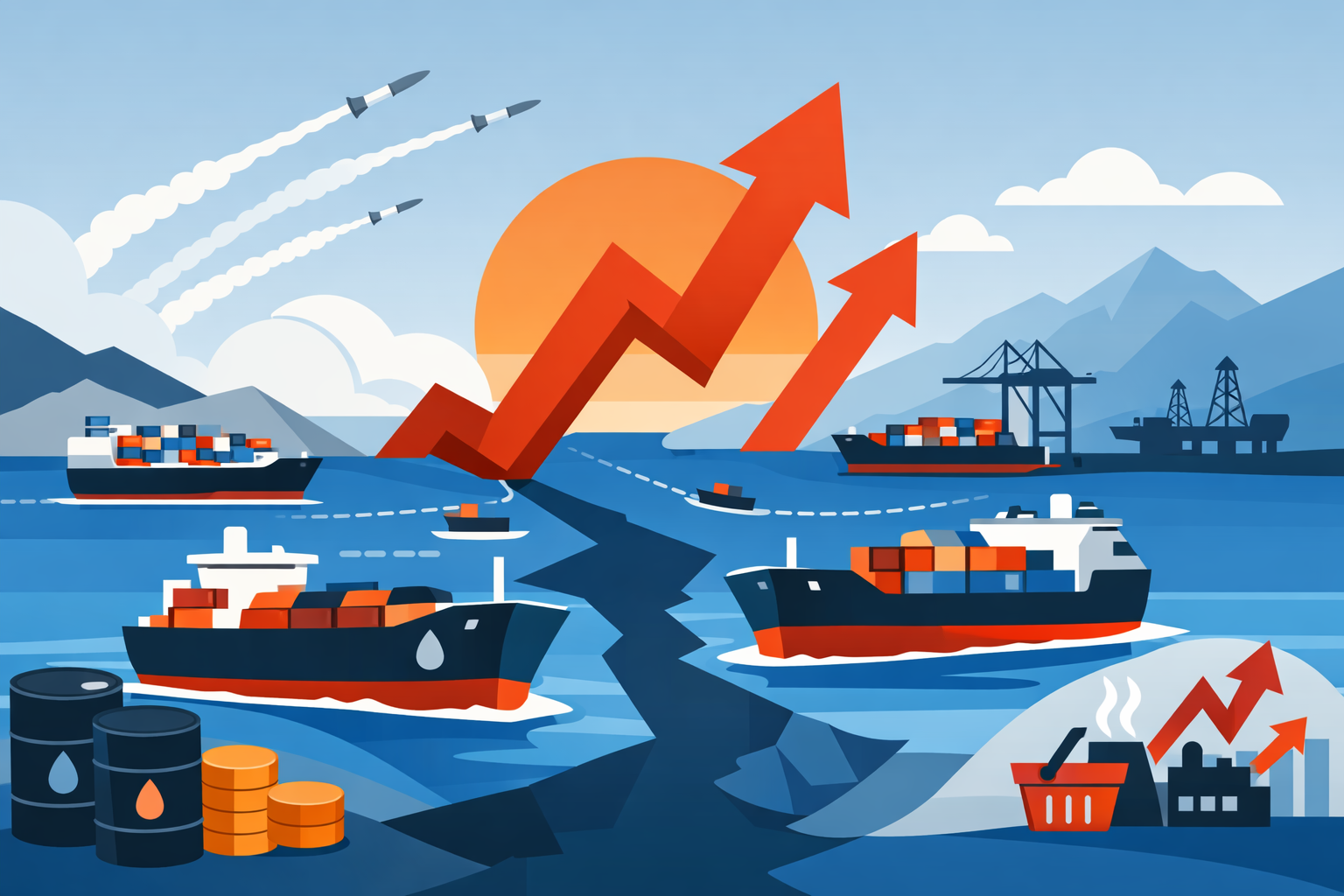
Four weeks into the U.S.–Israeli military campaign against Iran, the energy shock rippling outward from the Middle East has crossed a threshold. It is no longer mainly a story about missiles and shipping lanes. It is becoming a global economic event — one that touches airline ticket prices in Chicago, factory shifts in Manila, and gas storage levels in Rotterdam. At this week’s CERAWeek conference in Houston, the energy industry’s premier annual gathering, the tone among executives and ministers was not panic, exactly, but something close to resignation: the emergency tools governments have deployed so far are not keeping pace with the scale of the disruption.
The numbers frame the problem starkly. The Strait of Hormuz, through which roughly 20% of the world’s oil and liquefied natural gas flows, has been effectively shut down by the conflict. According to Reuters reporting from CERAWeek on March 24, some 20 million barrels per day of oil supply are at risk of removal from global markets under current disruption conditions. The IEA has called it the biggest supply disruption in the history of the oil market. Kuwait Petroleum Corporation CEO Sheikh Nawaf Al-Sabah, whose country has had to curtail its own 2.6-million-barrel-per-day output and halt deliveries to refiners, was blunt about the international response. The combined emergency measures taken by governments worldwide, he said, do not even qualify as stopgap solutions.
Governments Are Responding — But Not Enough
To be fair, the policy response has not been trivial. Governments around the world have released a record 400 million barrels from strategic petroleum reserves. The United States has waived sanctions on some Iranian and Russian oil to let refiners short of supply access additional barrels. Washington has also eased sanctions on Venezuela to allow U.S. firms to do business with Caracas’s state oil company, and the White House waived a shipping regulation for 60 days to ease logistics.
These steps help at the margin. They keep spot markets from seizing up entirely and buy time for governments to coordinate further. But they do not replace the physical volume of crude and LNG that has stopped flowing through Hormuz. Strategic reserves, by definition, are finite — a buffer, not a solution. Sanction waivers take time to convert into actual cargoes, and the barrels they unlock are often heavy or sour grades that not every refinery can process efficiently. The logistics of rerouting global energy flows around a closed chokepoint involve longer shipping distances, higher insurance premiums, and constrained port and pipeline capacity at alternative routes.
The IEA has indicated it is prepared to release more of its member nations’ 1.4 billion barrels in reserve, and G7 discussions on coordinated action are underway. But even the agency’s own language hints at the limits: it is consulting rather than acting, which suggests that the political and logistical barriers to a larger coordinated release remain significant.
Why Higher Prices Won’t Quickly Produce More Oil
There is a common assumption that when oil prices spike, American shale producers will ride to the rescue. That assumption is outdated.
Reuters reported on March 23 that oil prices above $100 a barrel would not trigger a meaningful production increase from U.S. shale unless prices stay elevated for more than a quarter. Shale executives at CERAWeek explained why. Companies have already locked in their 2026 spending plans and cannot easily revise them. ConocoPhillips, one of the largest U.S. producers, said it is not currently considering increasing output and would need to see sustained higher prices before doing so. Its CEO, Ryan Lance, went further, saying it would be difficult for U.S. operators to lift production in a meaningful way until 2027 regardless of price levels.
The reasons are structural, not just strategic. Over the past decade, shale companies have shifted from a growth-at-all-costs model to one built around capital discipline, shareholder returns, and balance-sheet strength. Many producers budgeted their 2026 plans around WTI prices in the $55–60 range. With forward curves still pricing in a decline from current levels, operators see the spike as potentially temporary — and they remember the damage done by overinvesting during past price surges that didn’t last. The inventory of drilled-but-uncompleted wells, which could theoretically be brought online quickly, is also limited. Even in an optimistic scenario, analysts at Rystad Energy estimate U.S. shale could add only about 600,000 barrels per day by year-end — a fraction of the Hormuz gap.
Repsol’s Francisco Gea captured the industry mood at CERAWeek with a simple line: the company has a plan, and it is not going to improvise because of the price environment. Some smaller private producers may bring a few completed wells online faster, but the aggregate response from U.S. shale will be measured in quarters, not weeks.
Asia First, Europe Next
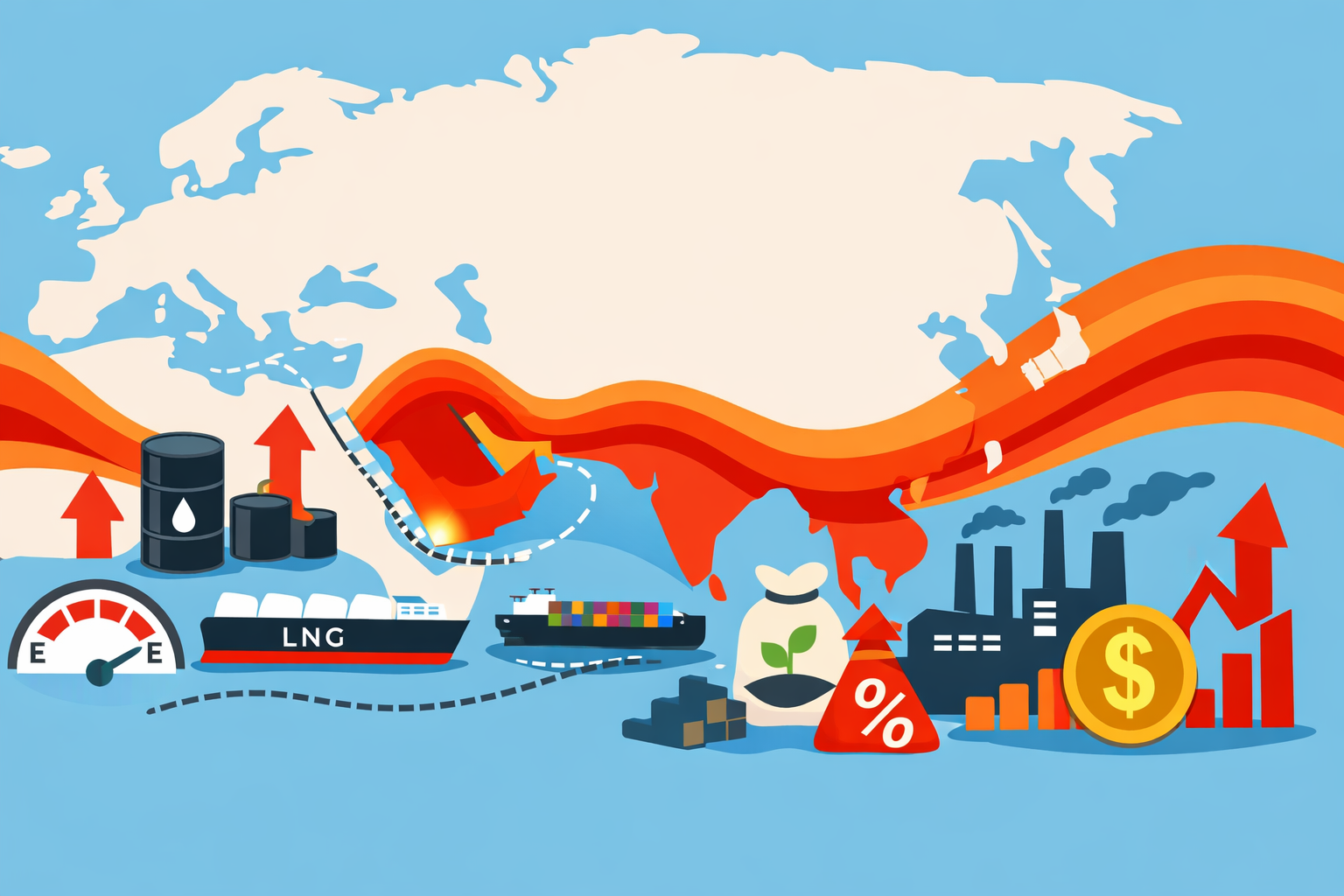
The regional sequencing of the crisis matters. Asia, the most dependent region on Middle Eastern energy, has absorbed the initial blow. Countries across South and Southeast Asia have already implemented emergency conservation measures that would have seemed extraordinary a month ago: four-day work weeks, appeals for citizens to limit travel and take stairs instead of elevators, and in the Philippines, a formal declaration of a national energy emergency.
Shell CEO Wael Sawan, speaking at CERAWeek, traced the geographic progression of the shock. South Asia was hit first. The disruption then moved through Southeast Asia and Northeast Asia, and it is now heading toward Europe as April approaches. Both Sawan and German economy minister Katherina Reiche warned that supply shortages could reach Europe next month if the conflict continues.
The implications for Europe are particularly uncomfortable because the continent has not built sufficient resilience into its energy system. Sawan pointed to a pattern of reactive rather than strategic planning, noting that the best energy strategies look five or ten years ahead to build resilience, rather than scrambling once a crisis is already underway. The war has already tightened jet fuel supply. Diesel is expected to be the next product affected, followed by gasoline as the Northern Hemisphere’s summer driving season begins. For European economies that are already contending with sluggish growth and persistent inflation, an energy squeeze layered on top could be genuinely painful.
The Inflation Channel: Fuel, Fertilizer, Food, Freight
If the crisis were confined to headline oil prices, the macroeconomic fallout would be significant but manageable. It isn’t. The disruption is simultaneously pushing up costs across multiple input categories that feed into consumer prices through different channels and at different speeds.
Fertilizer and petrochemical costs are rising alongside crude and LNG. That means higher input prices for agriculture and manufacturing, with downstream effects on food costs that tend to hit lower-income consumers hardest. Shipping and freight costs are climbing as vessels reroute around the Cape of Good Hope, adding distance, time, and fuel consumption to global supply chains. United Airlines has warned it may raise ticket prices by up to 20%. These are not hypothetical transmission mechanisms — they are already showing up in corporate disclosures and government emergency orders.
Producer prices will register these pressures before they fully appear in consumer price indices. But the lag is not long, and if the supply disruption persists through the second quarter, headline and core inflation readings in multiple economies are likely to move higher. The pass-through is particularly direct in import-dependent economies across Asia and Europe, where energy costs feed rapidly into industrial margins and utility bills.
What This Means for Central Banks
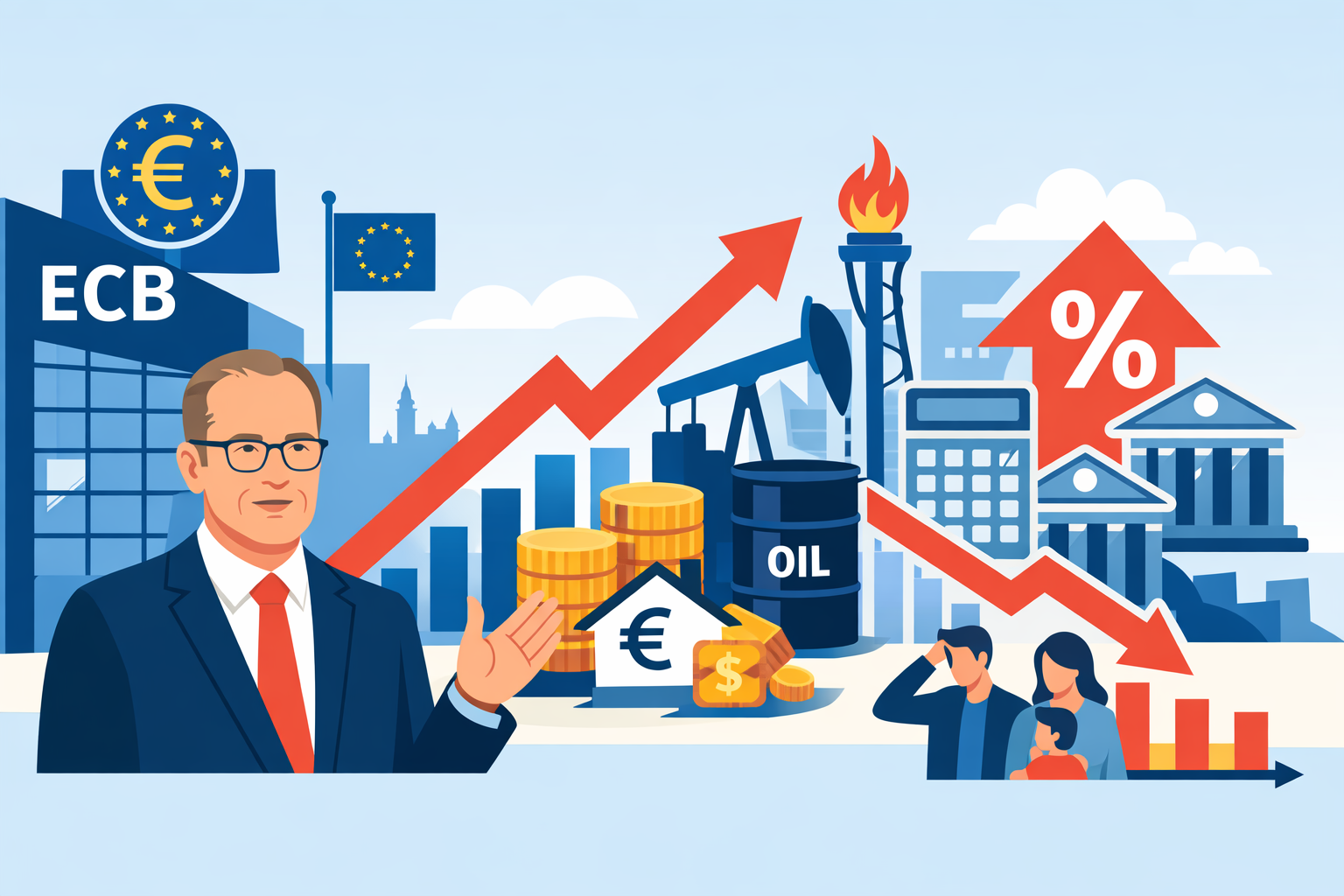
The inflation implications create a genuine dilemma for monetary policymakers. Before the conflict, markets in the U.S. and the eurozone had been pricing in the possibility of rate cuts later in 2026, on the assumption that inflation was gradually returning to target. A sustained energy shock could delay or reverse that trajectory.
This is not a prediction that rate hikes are coming — the situation is too fluid for that. But the logic is straightforward: if fuel, fertilizer, and freight costs remain elevated for months, they will harden inflation expectations and make it more difficult for central banks to justify easing. Import-dependent economies in Asia face a particularly sharp version of this problem, because higher energy costs simultaneously weigh on growth and push up prices, forcing policymakers to choose which risk to prioritize. The longer the disruption persists, the more likely it is that monetary policy expectations across major economies will need to be recalibrated.
What to Watch Next
The trajectory of this crisis will be shaped by a handful of concrete developments over the coming weeks, and they are worth tracking closely.
First, the status of Hormuz shipping flows. Any resumption of tanker traffic — even partial — would materially change the supply picture. Second, whether the IEA and G7 move from consultations to an actual coordinated release beyond the 400 million barrels already deployed. Third, Brent crude and Asian LNG spot prices, which are the most direct market-based indicators of supply tightness. Fourth, whether Europe begins to show physical shortages in April, as Sawan and Reiche warned. If that happens, it will mark an escalation from price pain to actual rationing risk. Fifth, whether any U.S. producers announce revisions to their 2026 drilling plans — a signal that the industry sees the price environment as durable rather than transient. And finally, watch for evidence of industrial curtailment or fuel rationing in Asia and beyond, which would signal that the shock is moving from financial markets into the real economy in a more disruptive way.
The gap between what governments can do quickly and what the market actually needs is the defining feature of this crisis. Emergency reserves buy time, but they do not rebuild supply chains. Sanction waivers open doors, but barrels still have to be produced, shipped, refined, and delivered. And the one country with the most flexible production base — the United States — has an industry that is structurally unwilling to respond at the speed the moment demands. Whether this shock remains painful but contained, or tips into something recessionary, depends on how long these gaps persist. So far, the signals from Houston are not reassuring.