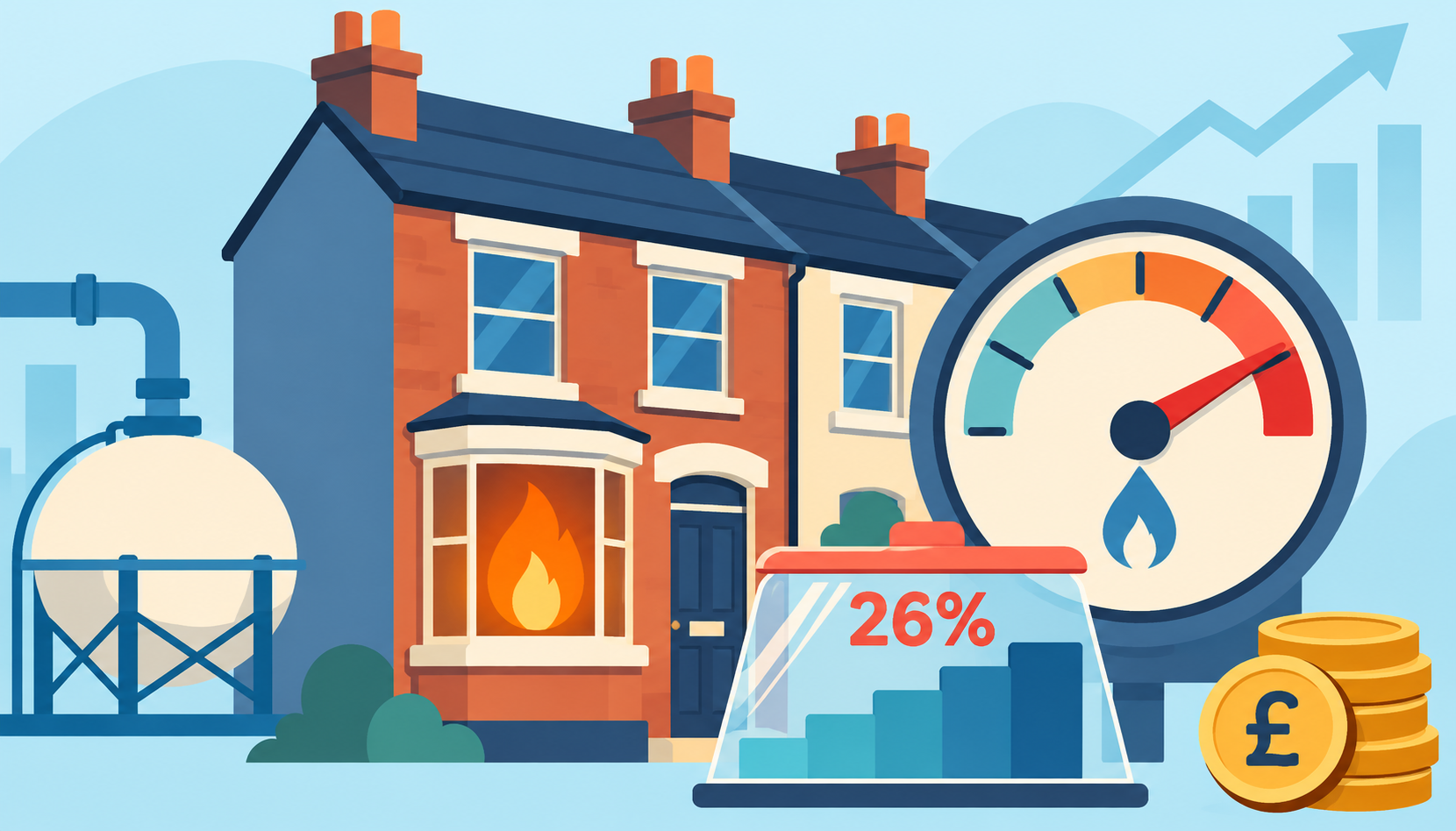
Ofgem announced a 26% rise in the energy price cap on November 25, lifting the annualised bill for a typical household from £1,723 to £2,166 for January to March 2027. On the 2023 consumption benchmark the same cap would read £2,451, because Ofgem now assumes households use less energy.
Key Takeaways
- Ofgem’s cap for January 1 to March 31, 2027 is £2,166 a year for a typical Direct Debit household, up 26% from £1,723.
- On the older 2023 consumption benchmark the cap rises from £1,935 to £2,451, so the headline figure understates the cost of the energy households used in 2023.
- Gas bills in the cap rise 33% and electricity bills 19% compared with October, which Ofgem ties to gas wholesale prices roughly tripling since the Middle East conflict began.
- About 10 million households on fixed tariffs are unaffected while their deals last, and around 20 million on standard variable tariffs face the new cap.
Ofgem’s cap adds £443 a year to a typical annualised bill
Ofgem announced the new level on November 25, 2026, in a press release. The cap applies from January 1 to March 31, 2027. For a typical household that pays by Direct Debit for gas and electricity, the annualised figure rises from £1,723 to £2,166, a difference of £443. Ofgem describes this as the bill “if this level was sustained for a year”, so no household pays £2,166 in January.
The cap limits the unit rates and standing charges that suppliers can charge on default tariffs. It does not set a maximum total bill, so what a household pays depends on how much energy it uses. Ofgem updates the level every three months to reflect changes in the underlying costs of supplying energy.
The regulator gives one reason for the increase: the continued conflict in the Middle East is pushing up international gas prices. Neil Kenward, Ofgem’s Director General for Markets, said the conflict continues to drive energy costs higher and acknowledged that the increase will worry many households as winter approaches. Ofgem also wrote to energy suppliers, networks and brokers on the same day to remind them of their obligations to customers this winter.
The £2,166 headline rests on a lower consumption benchmark
The most useful detail sits in the notes to editors. In July, Ofgem updated the Typical Domestic Consumption Values, or TDCV, which set the amount of energy the cap assumes a typical household uses. Ofgem cut them because households now use around 7% less electricity and 17% less gas than at the previous review. It cites improved energy efficiency, warmer weather and higher prices.
A lower assumed volume lowers the headline figure. Ofgem states that on the old 2023 TDCV the current cap would have been £1,935 and the January cap would be £2,451. That is a rise of about 27%, a little above the 26% on the new basis, and £285 more than the £2,166 headline. Ofgem’s note also says that, adjusted for inflation, the new cap is 31.8% higher than the same period in 2026.
A household that still uses close to the 2023 typical volumes should treat £2,451 as its reference point. A household that has cut its use will sit closer to £2,166. The headline compares two periods on the same new basis, but it is a poor guide to what 2023-level consumption would cost today.
Gas unit rates rise about 37.5% while standing charges stay flat
Ofgem’s published rates show where the increase lands. For the national average Direct Debit customer, the gas unit rate moves from 7.97 pence per kilowatt hour in October to December 2026 to 10.96 pence in January to March 2027. The electricity unit rate moves from 26.32 pence to 32.69 pence, about 24%. Standing charges are almost unchanged, at 29.65 pence a day for gas and 54.77 pence for electricity.
The increase therefore falls on the energy a household uses. Because the flat standing charges dilute the rise, the 33% gas and 19% electricity bill increases in the takeaways are smaller than the unit-rate increases. Households budgeting for a specific month should apply the unit rates to their own use. A household that heats with gas feels it more than one that heats with electricity, and a cold winter magnifies it, because the cap sets a price per unit and not a monthly total.
Ofgem says gas wholesale prices have roughly tripled since the Middle East conflict began, and gas bills in the January cap are 33% higher than in October. Electricity bills rise 19%. Gas also drives electricity prices, but its share of generation is falling as more renewables are built, so electricity rises by less. Electricity also carries no VAT from October 1, 2026 to June 30, 2027, while gas carries 5%, and Ofgem warns that costs cannot be compared directly to earlier periods because of this change.
Fixed-tariff households are shielded while their deals last, and others face the new cap
Ofgem says the cap affects around 20 million households on standard variable tariffs. Around 10 million households on fixed tariffs are not affected by this increase while their fixed deal remains in place. Ofgem’s release does not say when those fixed deals end, so the protection has an unknown expiry for many of them.
Within the variable group, Ofgem counts around 12 million Direct Debit households, around 4 million on standard credit and around 3 million on prepayment meters. Payment method matters. Kenward said switching to Direct Debit from paying on receipt of a bill would save the average customer about £160 over a year. He also suggested that some customers consider whether a fixed tariff suits them.
The Government has announced that around 20 million households will receive £100 towards their energy bill from January. Against a £443 rise in the typical annualised bill, £100 covers less than a quarter. Households that use more energy than the typical household get less relief in proportion to their bill.
Ofgem has told suppliers to identify people who need help early, make support easy to access and ensure repayment plans are affordable and sustainable. It says it is increasing its monitoring of how suppliers treat customers over the winter. The regulator also states that its rules on supplier financial resilience have put the sector on a much stronger footing to withstand wholesale price volatility.
Market Context
Wholesale gas costs sit behind the January level. The European gas benchmark below is a proxy, not a UK-specific price. It averaged $25.49 per million British thermal units in September 2026, more than double a year earlier but well below the $69.98 recorded in August 2022. Brent crude and the gilt yield are shown for context only, and none of the series is shown to have moved because of Ofgem’s decision.
| Indicator | Latest value | Date | Source |
|---|---|---|---|
| EU natural gas price, USD per million BTU | 25.494 | September 2026 (monthly) | FRED |
| Brent crude, USD per barrel | 92.94 | November 17, 2026 (daily) | FRED |
| UK 10-year government bond yield, percent | 5.3393 | October 2026 (monthly) | FRED |
The gilt yield stood at 4.80% in June 2026 in the same series, so borrowing costs for the UK government have risen alongside energy costs over the summer and autumn.
Analyst’s View
Three implications follow from the numbers, and each is a judgement rather than a reported fact.
First, the inflation channel. A 26% step in the default-tariff cap for around 20 million households is likely to raise measured household energy costs early in 2027, which adds to the price pressure that the Bank of England and gilt investors already face. Gilt holders are the most exposed, because a higher inflation path can push up yields from an already elevated 5.34%. Readers tracking this channel can follow our earlier analysis of UK inflation and the borrowing overshoot.
Second, household credit. The households most exposed are those on standard credit and prepayment meters, who cannot claim the Direct Debit saving and pay for energy in a less predictable way. The risk is more arrears at suppliers and more strain on lenders to lower-income customers. Ofgem’s monitoring and its reminder on repayment plans are the first line of defence, and the sector’s stronger financial position is Ofgem’s own assessment, which this winter will test.
Third, fiscal exposure. The £100 payment and the VAT exemption on electricity until June 2027 are budget costs that fall on the Treasury and ultimately on gilt investors. If gas prices rise again, pressure for more support would grow. Our earlier look at Qatar LNG hub damage and its effect on gas prices covers one of the supply channels behind the gas benchmark.
What to Watch
- January 2027: the Government’s £100 payment toward energy bills begins, according to Ofgem.
- January 1, 2027: the new price cap of £2,166 a year for a typical household takes effect.
- March 31, 2027: the current cap period ends and Ofgem’s three-monthly update sets the next level.
- June 30, 2027: the zero VAT rate on domestic electricity is scheduled to end.