The European Commission has approved €659 million in German State aid for four new semiconductor facilities, adding a targeted package of materials, power-chip, metrology and specialised-detector capacity to Europe’s industrial policy. The Commission announced the decision on 14 July and described the projects as first-of-a-kind facilities in the European semiconductor value chain.
The money will come as direct grants financed jointly by Germany’s federal government and the relevant Länder. The decision matters less for headline wafer volume than for the mix of technologies it supports. The four projects sit at different points in the chain that turns materials, production tools and specialised components into finished electronic systems.
Four projects, four roles
The largest award, €353 million, goes to Element 3-5 GmbH for a Baesweiler, North Rhine-Westphalia facility that will manufacture silicon-carbide epitaxial wafers. The company’s planned SiCnature plant will make wafers with a high-quality silicon-carbide layer for applications that include automotive, industrial equipment, telecommunications and energy systems.
Vishay Siliconix Itzehoe GmbH will receive €214 million for a new facility at its existing site in Itzehoe, Schleswig-Holstein. The project will manufacture N- and P-channel power MOSFETs, components used to switch or control high voltages and currents in power electronics. Those devices are common in electric-vehicle drivetrains, charging equipment, industrial motors and power-management systems.
KLA-Tencor MIE GmbH receives €74.4 million to build advanced optical overlay and film-metrology equipment in Weilburg, Hesse. Metrology tools measure and inspect semiconductor production steps. Their value comes from helping manufacturers control process variation, improve yield and qualify more complex production lines.
The smallest grant, €17.9 million, supports KETEK GmbH in Munich. KETEK plans two production lines for silicon drift detector chips and graphene radiation entry windows, components used in detector systems for industrial sorting and recycling. The projects are distinct, but together they cover a materials input, a power semiconductor, a production-enabling tool and a specialised sensing component.
Why Brussels approved the aid
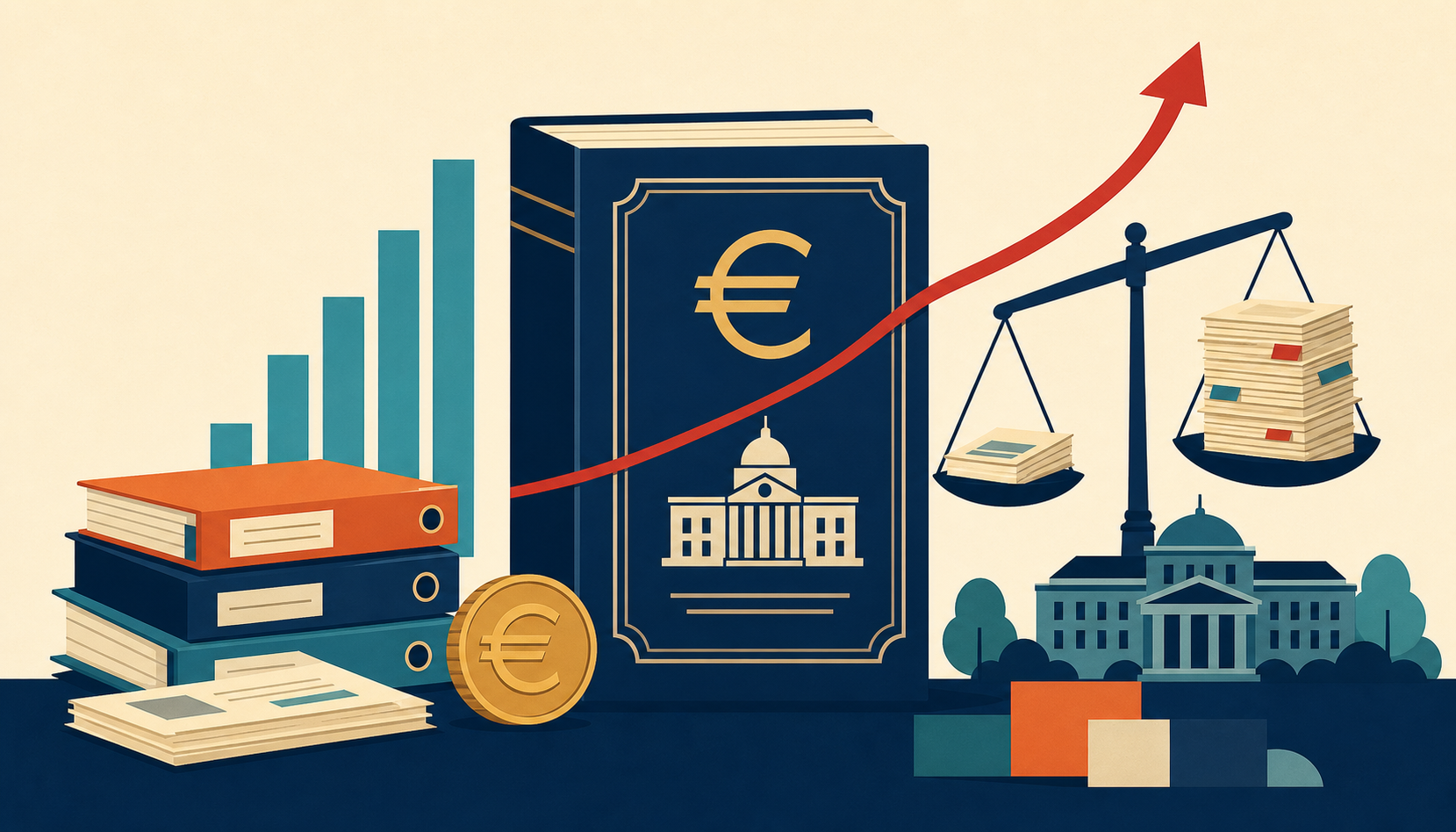
The Commission assessed the package under Article 107(3)(c) of the Treaty on the Functioning of the European Union and the principles used for the European Chips Act. That legal test permits aid that facilitates specified economic activity when the support is necessary, proportionate and does not create an undue distortion of competition.
According to the Commission, the projects qualify as first-of-a-kind in Europe. It also found that the aid had an incentive effect: Element 3-5, Vishay and KLA would not carry out the investments in the European Union without support, while KETEK would not carry out its investment at all. The companies have agreed to collaborate with universities, research institutions, start-ups and small and medium-sized enterprises, and to give priority to orders during a supply shortage. They must also share potential project-related profits with Germany beyond current expectations.
Those conditions give the decision a broader policy purpose. Public money is funding individual plants, but Brussels is also seeking a wider pool of skilled workers, local research links and a more resilient European supply chain. The beneficiaries are applying for Integrated Production Facility status under the Chips Act, which carries further obligations tied to security of supply.
A supply-chain decision, not a single-fab bet
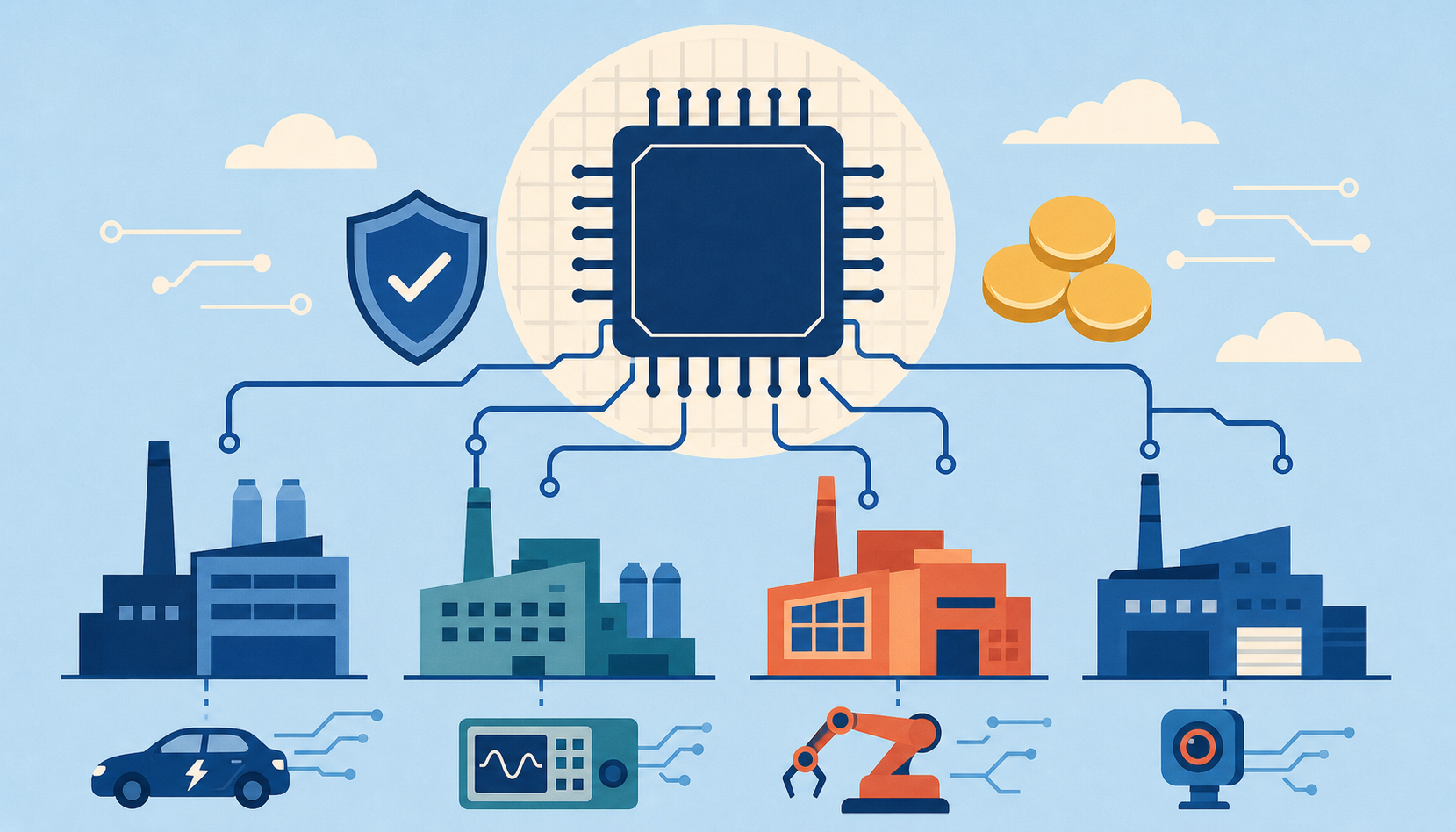
Europe’s semiconductor strategy often attracts attention when a large logic or memory fab is announced. This package follows a different logic. Silicon-carbide wafers support high-power devices; MOSFETs move and manage electricity; metrology equipment helps fabs raise yield; specialised detectors serve industrial applications. A weak link in any of those areas can delay downstream manufacturing even if a region has access to mainstream chips.
Germany published its call for innovative investment projects in the European semiconductor value chain in November 2024. The Commission said the approvals cover the eighth and ninth projects pre-selected through that call. The four decisions bring the Commission’s cumulative approved aid under its semiconductor principles to about €14.2 billion across past measures, according to the announcement.
The Commission has proposed a Chips Act 2.0, but the current package was reviewed under the existing State-aid framework. Investors should treat the approval as a permission to proceed, not as proof that each facility will meet its construction, qualification or commercial targets on schedule. Semiconductor projects face long lead times, equipment bottlenecks, customer-qualification hurdles and competition for engineers.
Analyst’s View
The strongest economic signal lies in the package’s spread across the value chain. Germany is backing capacity that can feed electric-power systems, factory automation and industrial sensing, while also supporting the metrology tools that chipmakers need to keep advanced production lines within specification. That mix may strengthen supplier relationships around German manufacturing clusters if the facilities reach scale and win customers.
For credit markets, execution risk remains central. Grant support can narrow a funding gap, but it does not remove demand risk, construction risk or the cost of running energy-intensive facilities in Europe. Lenders and suppliers will watch capital spending milestones, customer commitments and the terms attached to Integrated Production Facility recognition. For sovereign and regional public finances, the profit-sharing provisions and narrow State-aid review provide safeguards, yet the economic return still depends on plants operating at viable utilisation rates.
For market positioning, the projects favour European suppliers exposed to power electronics, semiconductor materials, inspection equipment and industrial automation over a single pure-play foundry thesis. The decision also signals that Brussels will continue to use competition-policy tools to support strategically important production where it can show a concrete supply-chain benefit. The next test is operational: whether these projects convert public approvals into dependable European output.
Primary sources: European Commission competition policy announcement; European Commission competition policy overview.