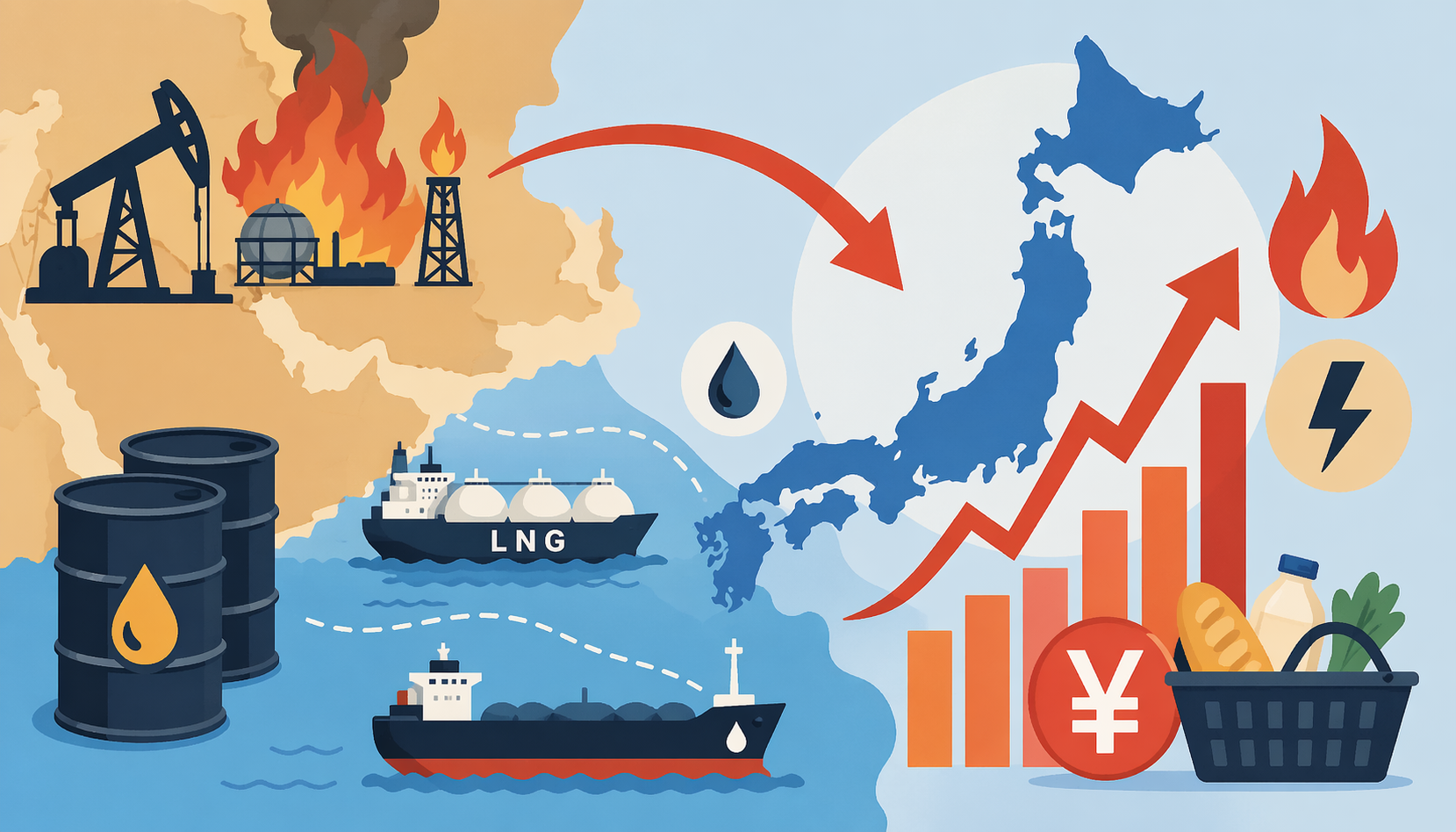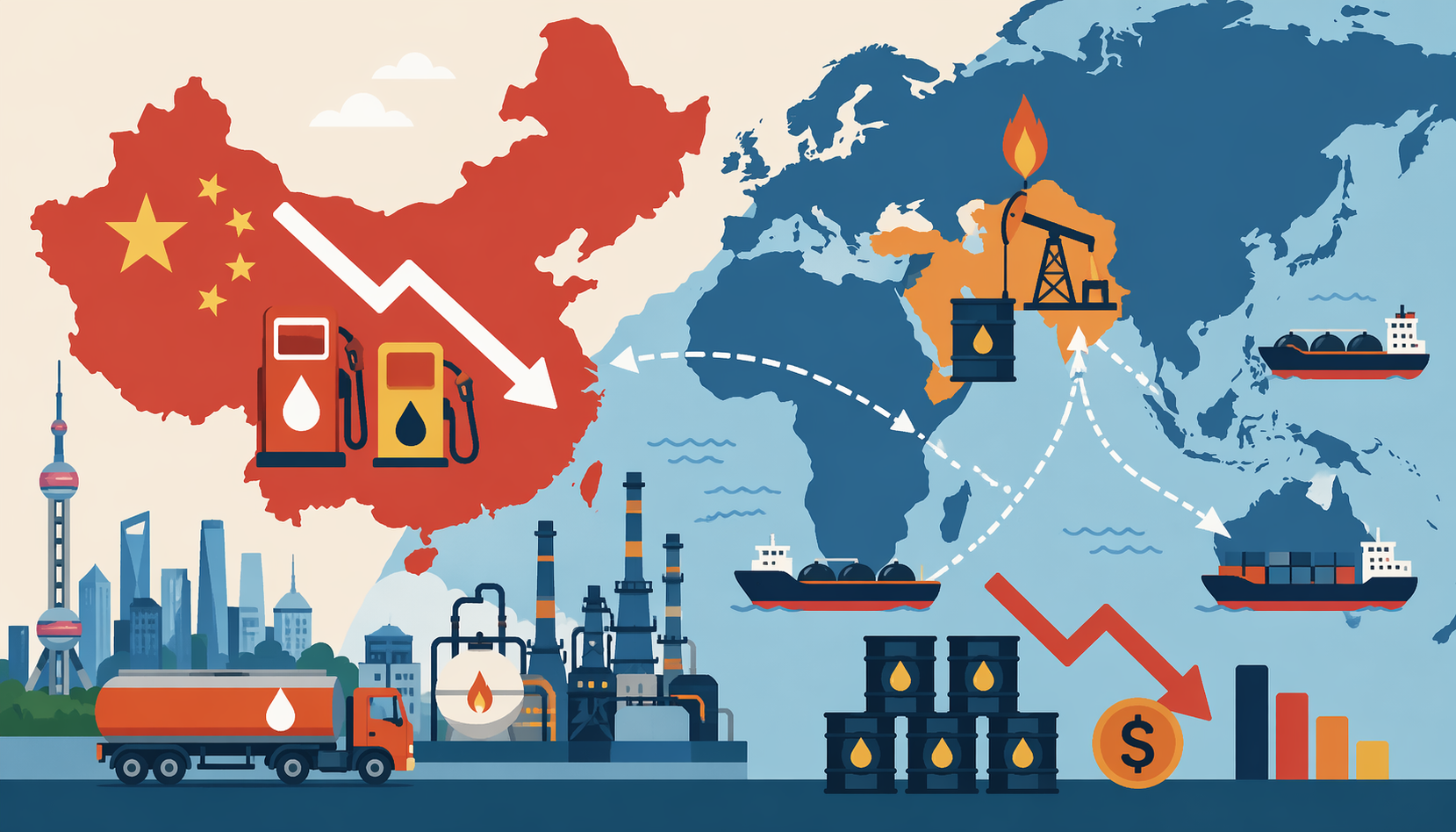
For the first time since the Iran war upended global oil markets, Beijing has moved to lower what Chinese drivers pay at the pump. On April 21, China’s National Development and Reform Commission (NDRC) announced it would cut the country’s regulated price caps on gasoline by 555 yuan per tonne and on diesel by 530 yuan per tonne, effective at midnight the same day. In Beijing, the headline 92-octane gasoline price will slip from 8.90 yuan per litre to 8.46 yuan per litre — a modest but visible retreat from the wartime peaks of recent weeks.
It is a small number with a larger story behind it.
China’s fuel prices do not float freely. Retail caps are reset on a rolling basis, tied to an average of recent international crude moves, and the state reserves the right to intervene when volatility runs hot enough to threaten either the cost of living or industrial competitiveness. That mechanism is why earlier this year, as Brent spiked following the escalation with Iran, pump prices inside China climbed in visible, administered steps rather than in a single jolt. On April 7, the NDRC raised caps by 420 yuan per tonne for gasoline and 400 yuan per tonne for diesel. Reuters background reporting notes that an even larger wartime increase had been pushed through in March, when crude surged in the immediate aftermath of the conflict’s escalation.
This week’s cut is the first meaningful reversal since then.
What actually changed
In strict policy terms, the move is technical. The NDRC adjusts caps based on a reference basket of global crude prices over a recent window; when that window averages lower, the formula delivers a cut. Crude has pulled back from the highest levels it touched during the Iran war shock, and enough of that retreat has now fed through the calculation to justify a downward revision.
But describing this as a formula outcome alone would miss the point. Beijing has used the same mechanism for years to shield the domestic economy from the sharpest edges of international price swings, and the decision to pass some of the recent relief through — rather than holding caps high and banking the margin for refiners — is itself a signal. It tells transport operators, logistics firms, and manufacturers that policy is paying attention to their input costs. It tells households that the government is not indifferent to a year in which energy bills have been the most uncomfortable line item in the budget.
For 92-octane gasoline in Beijing, the per-litre drop works out to about 44 fen. Over a full tank, it is the kind of saving a taxi driver notices but a commuter might not. In aggregate across a country that is the world’s largest crude importer, however, the effect on diesel-heavy sectors — trucking, construction, agriculture — is not trivial.
Why now
Three things are worth separating here.
The first is mechanical: the formula called for a cut. Once international benchmarks cooled from their wartime highs, China’s adjustment mechanism was always going to catch up eventually. This round happens to be the round in which it does.
The second is political. Chinese policymakers have spent months absorbing the second-order effects of an energy shock that was not of their making — imported inflation pressure on food and transport, squeezed margins at small manufacturers, and the uncomfortable optics of pump prices rising while growth targets remain ambitious. Passing through a visible cut, even a modest one, buys some breathing room on all three fronts.
The third is strategic. Beijing is signalling that it can and will use administered pricing as a stabilizer in both directions. On the way up, caps blunted the pass-through of the Iran shock. On the way down, caps deliver the relief rather than letting it stay with refiners or get lost in retail margins. For a government that has been trying to rebuild consumer confidence and support industrial activity, that two-way visibility matters.
None of this means the underlying crisis has resolved itself.
Still an energy-crisis story
It is tempting to read a price cut as the start of a normalization. The facts on the ground argue otherwise. The International Energy Agency has described the current conflict as one of the most severe global energy-security shocks in recent memory, with the Strait of Hormuz — the chokepoint through which roughly a fifth of the world’s oil and LNG flows — remaining the single most consequential piece of infrastructure in the market. A renewed disruption there would reverse the relief delivered by this week’s NDRC decision in a matter of days, not weeks.
Crude has pulled back, but it has not returned to pre-war levels, and it is not trading as if anyone expects it to soon. Futures curves, tanker insurance premiums in the Gulf, and the behaviour of major Asian buyers all point to a market that is pricing in continued fragility. The cut China announced this week is happening inside that environment, not after it.
That distinction matters for how to read the policy move. This is a tactical adjustment, not a strategic pivot. It is what a competent state energy bureaucracy does when the inputs to its pricing formula shift; it is not an announcement that the crisis has passed.
Why this is not only a China story
China imports more crude than any other country and sits at the centre of Asia’s industrial supply chains. When Beijing adjusts its fuel-price regime, the signal radiates outward.
For the region’s inflation picture, a lower Chinese fuel bill means fractionally lower costs embedded in the goods China exports — electronics, machinery, intermediate industrial inputs — which affects price pressures in economies from Seoul to Frankfurt. For Asian governments that have been wrestling with their own wartime energy politics, China’s move sets a reference point. Japan, South Korea, India, and several Southeast Asian economies have been running their own combinations of subsidies, tax adjustments, and administered-price tweaks. None of them will copy Beijing’s mechanism directly, but all of them watch it.
For global markets, the more interesting question is about demand. China’s willingness to cut caps rather than hold them elevated suggests the authorities are comfortable — for now — that crude will not retest its highs in the immediate term. If that judgement turns out to be wrong, the mechanism will simply reverse, and another round of increases will follow. The point is that Beijing has told the market something about how it reads the next few weeks.
Winners, losers, and what to watch
The direct beneficiaries are easy to name. Transport operators, logistics firms, and diesel-heavy industries see a small margin of relief. Consumers filling personal vehicles get a modest break. The refiners and state-owned energy companies that had been absorbing part of the wartime squeeze — or passing it through in administered steps — face a different arithmetic depending on where their own crude input costs settle.
For policymakers, the cut buys a little room on inflation. It does not fix the structural problem, which is that China, like most of Asia, remains heavily exposed to a Middle East energy architecture that has become visibly unstable.
The things worth watching from here are straightforward. Whether crude resumes its climb. Whether Beijing uses its price-cap tool more aggressively in either direction. Whether other Asian governments follow with their own measures. And whether the headline inflation numbers in the region begin to soften in a way that suggests this relief is real, or whether it proves too small and too temporary to register.
What the April 21 cut really marks is a moment of pause inside a larger crisis — the first point at which the wartime ratchet has turned the other way. Whether that turn becomes a trend or stays a blip depends almost entirely on decisions being made thousands of kilometres away from any Chinese fuel station.