The Strait of Hormuz is a narrow waterway, but the economic risk now flowing through it is anything but small. UN Secretary-General António Guterres has warned that prolonged restrictions on shipping through the Gulf chokepoint could push the world toward recession, raising inflation, slowing growth, and deepening hardship for vulnerable economies. His warning turns a regional security crisis into a global economic question: how long can the world absorb an energy and shipping shock before it becomes a broader downturn?
A narrow strait with global consequences
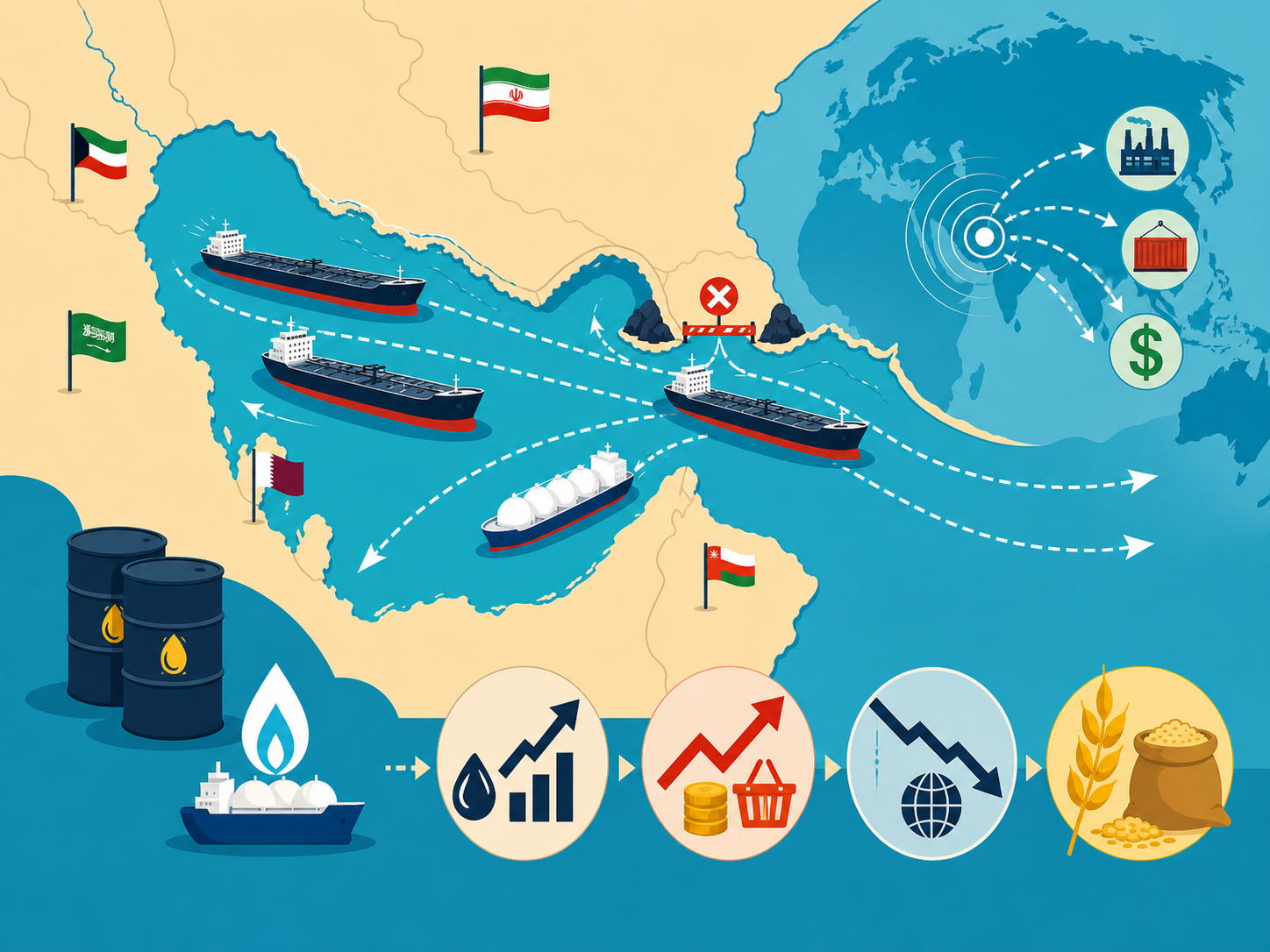
For most readers, Hormuz is a name that surfaces only when something goes wrong. It deserves more attention than that. The Strait is one of the world’s critical “shipping chokepoints” — a stretch of water so narrow, and so concentrated in the cargoes it carries, that even partial disruption can ripple across continents. Crude oil, liquefied natural gas (LNG, natural gas cooled to a liquid for shipment by sea), refined fuels, petrochemicals, and fertilizer feedstocks all move through it in volumes that no other route can quickly replace.
That is why Guterres framed the current crisis not as a Gulf problem, but as a global one. When a chokepoint like Hormuz is restricted, the effect does not stay at the waterline. It travels through energy markets, food systems, logistics costs, inflation expectations, and ultimately the policy choices of central banks an ocean away.
What the UN actually warned
Guterres laid out three scenarios, and the gap between them is what gives the warning its force.
In the most benign case — restrictions lifted immediately — the UN still expects global growth to slip from around 3.4% to 3.1%, with inflation edging up to roughly 4.4% and trade slowing as supply chains absorb the disruption. Even a quick resolution, in other words, leaves a mark.
If disruption stretches into midyear, the human cost rises sharply. The UN projects that an additional 32 million people could be pushed into poverty, with 45 million more facing extreme hunger. These are not abstractions. They reflect how energy shocks transmit, through fertilizer and freight, into the price of bread and rice in countries that import most of what they consume.
The third scenario is the one that put the word “recession” in the headlines. According to reporting from Asian News International, syndicated through The Tribune, Guterres warned that if severe disruptions continue through year-end, global inflation could climb above 6% and global growth could fall to around 2% — a level economists generally treat as a recession in all but name, given population growth and the divergence between advanced and emerging economies.
Three quieter sentences, drawn from his remarks, capture the texture of his concern: open the Strait, let all ships pass, let the global economy breathe again. The longer this artery is choked, he warned, the harder the damage will be to reverse. And the consequences, he said, are not cumulative — they are exponential.
The danger isn’t only the lost barrels
It is tempting to reduce a Hormuz crisis to a barrel count. That misses how supply shocks actually work.
A “supply shock” is a sudden disruption to the goods or inputs an economy depends on, rather than to demand. When the supply side breaks, prices rise even as activity weakens — the uncomfortable combination economists call stagflation. Hormuz is producing exactly that pattern. The economic danger is not only the oil and gas that fail to arrive. It is the simultaneous repricing of risk across every leg of the journey: marine insurance premiums, freight rates, rerouting around the Cape of Good Hope, tanker repositioning, storage costs, and the contractual uncertainty that follows when force majeure clauses get tested at scale.
Even ships that sail face higher costs. Even cargoes that arrive command higher prices. And even the rumor of further escalation can move markets before any vessel changes course.
Energy, fertilizer, and the food channel
The energy hit alone is significant. The U.S. Energy Information Administration has estimated that the disruption has affected more than 10 billion cubic feet per day of LNG supply — roughly 20% of global volumes. The International Energy Agency notes that almost 90% of LNG exported through Hormuz in 2025 was bound for Asian markets, which is why the geography of the chokepoint matters as much as its throughput.
From there, the shock spreads. Higher LNG prices push up the cost of power generation in import-dependent economies. Higher crude lifts gasoline, diesel, and the petrochemical inputs that feed everything from packaging to plastics. And because modern fertilizer production is itself energy-intensive, what begins as an energy story becomes a food story within one or two growing seasons. Households in low-income countries — which spend a far larger share of income on food, fuel, and transport than households in advanced economies — feel that sequence first and hardest.
This is the multiplier the UN is pointing to. Hormuz is not one shock; it is a chain of them.
A central-bank dilemma in slow motion
Central banks cannot pump oil. They cannot reroute LNG cargoes. What they can do is set the price of money, which makes a supply-side shock a particularly awkward problem.
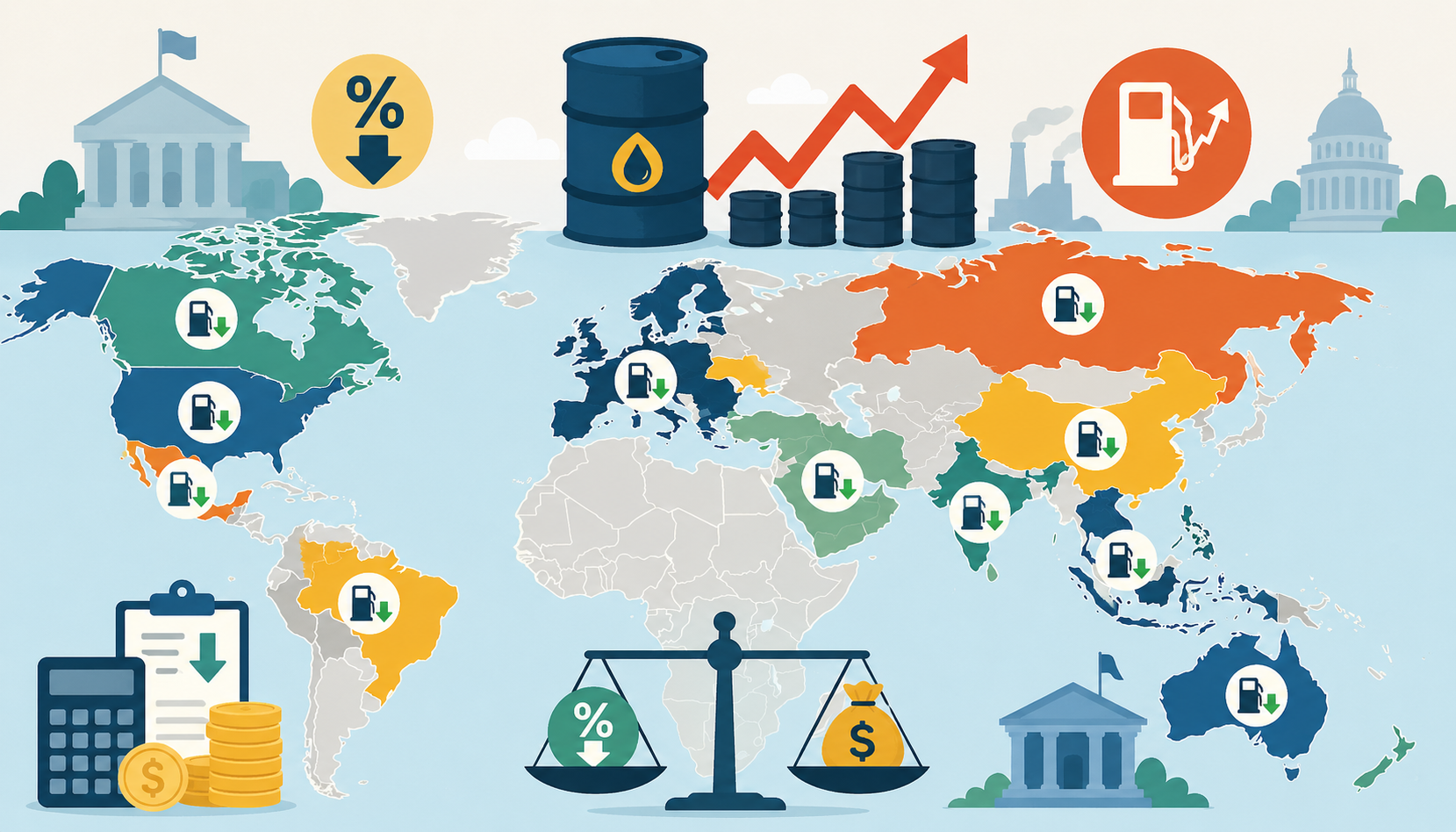
If they ignore the inflation impulse, expectations risk becoming unanchored. If they tighten aggressively to suppress it, they risk deepening the slowdown the shock has already triggered. And if governments step in with subsidies to soften the blow on households, fiscal deficits widen at a moment when bond markets are unusually sensitive. Each of these responses has consequences for currencies, sovereign debt, and the cost of capital across emerging markets.
Asia’s particular exposure
Asia sits closest to the firing line, both literally and economically. Japan, South Korea, China, India, and the major ASEAN economies are large net importers of crude and LNG, and several depend heavily on petrochemical and fertilizer inputs that originate in or transit through the Gulf. A Hormuz shock reaches them through at least three channels at once: higher import bills, squeezed manufacturing margins, and weaker household purchasing power as energy and food prices rise.
For exporters, the second-order effect matters too. If input costs climb faster than rivals’ and currencies weaken on the back of widening trade deficits, competitiveness erodes in markets that are already cooling.
Why “reopened” wouldn’t mean “fixed”
One of the most useful points in the UN’s analysis is that reopening the Strait would not flip a switch. Even an immediate lifting of restrictions, Guterres noted, would leave supply chains needing months to recover. Tankers would have to reposition. Insurance markets would reprice slowly. Ports that absorbed rerouted volumes would face congestion working in the other direction. Inventories drawn down during the disruption would need to be rebuilt. Contracts disputed under force majeure would need to be renegotiated. And the implicit trust that the route is reliable — the assumption underwriting every long-dated LNG and crude contract that runs through it — would take longer still to rebuild.
What to watch
For readers tracking how this unfolds, a handful of indicators carry more signal than the daily news flow: Brent crude, Asian and European LNG spot prices, tanker traffic counts through the Strait, marine insurance premiums on Gulf transits, fertilizer benchmarks, central-bank communications on inflation expectations, strategic reserve releases, and the diplomatic temperature around freedom of navigation in the Gulf.
None of these alone will tell the full story. Read together, they describe whether the world is settling into a contained shock or sliding into the longer scenario the UN is trying to head off.
A global economy built on fragile arteries
A measured reading of the moment is that recession is a risk, not a destiny. The UN’s warning is calibrated, not catastrophist; the worst case is conditional on prolonged disruption, and the best case still costs the world growth. What the Hormuz crisis exposes is something more uncomfortable than any single forecast: how thoroughly a global economy that often presents itself as digital, diversified, and resilient still depends on ships moving safely through narrow stretches of water. Inflation, food supply, and industrial production all run, at some point in their chain, through a few miles of sea between Iran and Oman. That dependency does not vanish when the shipping lanes reopen. It only becomes invisible again.