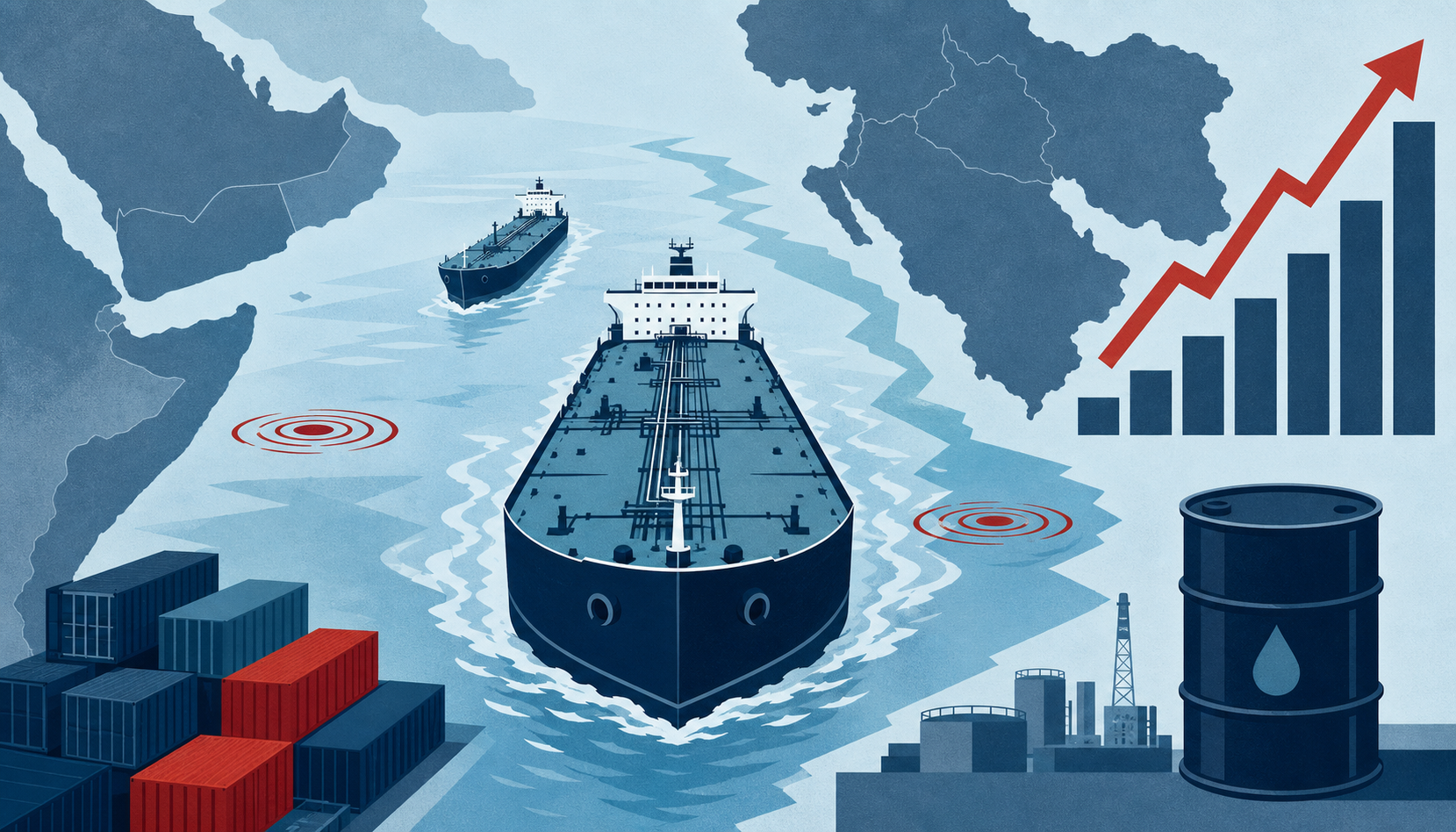
Oil prices broke above $100 a barrel on Thursday after attacks on Saudi tankers raised the risk that the Middle East war could disrupt the Red Sea as well as the Strait of Hormuz. Brent crude gained more than 6%, according to a Reuters report, as President Donald Trump threatened military punishment against Iran and the Houthis.
The Houthis said they struck two Saudi tankers, the Encelia and the Layla. A maritime security source told Reuters that the Encelia sent a distress call after a missile strike near Jizan, Saudi Arabia. Saudi state media reported a fire at the bow. Reuters could not confirm the claimed attack on the Layla. That distinction matters because the market moved on the prospect of a wider blockade before investigators had established the full damage.
The International Maritime Organization condemned the latest reported Red Sea attacks on July 23. It warned ship operators to assess transit risks and said continued attacks could disrupt commercial routes and global supply chains. The IMO stopped short of attributing responsibility in that statement.
Two energy chokepoints now shape the oil premium
The Red Sea connects the Indian Ocean to the Suez Canal through the Bab el-Mandeb strait. Tankers that avoid the route must sail around southern Africa, adding time, fuel use, insurance costs and demand for vessels. The new risk comes while shipping through the Strait of Hormuz remains fragile after months of conflict.
The scale of the existing shock leaves the market with little spare room. An IMF analysis published July 15 estimated that the effective closure of Hormuz had cut off about 20 million barrels a day of crude and refined products, equal to roughly one-fifth of global consumption. Producers rerouted some exports, while weaker demand, output outside the Gulf and inventory drawdowns kept crude mostly in a $90 to $100 range. The IMF warned that inventory drawdowns and rerouting had depleted much of this cushion.
Thursday’s move above $100 tests forecasts built on calmer shipping conditions. On July 7, the U.S. Energy Information Administration projected Brent at an average $74 a barrel in the third quarter. Its forecast assumed that a U.S.-Iran memorandum and a reopening of Hormuz would allow production and trade flows to recover toward pre-conflict levels. Renewed attacks in the Red Sea create a new route risk that the EIA’s published baseline did not include.
Oil markets will now watch three indicators: confirmed damage to tankers, changes in vessel traffic through Bab el-Mandeb, and any military response that affects ports or energy infrastructure. A single-day price move does not prove a lasting supply loss. A sustained diversion of tankers would tighten available shipping capacity even if physical oil production remained unchanged.
Inflation and growth risks return together
A longer spell above $100 would reach beyond fuel markets. Refiners would face higher feedstock costs. Airlines and shipping companies would pay more for fuel and insurance. Importers would pass part of those costs into food, manufactured goods and transport prices. Governments that cap retail fuel prices would absorb more of the shock through their budgets.
The IMF’s July World Economic Outlook briefing projected global growth of 3.0% in 2026 and global headline inflation of 4.7%. Its market assumptions used an average oil price of $89 a barrel for the year. IMF officials said renewed conflict escalation could revive commodity-price volatility, tighten financial conditions and strain policy buffers.
Energy-importing emerging markets carry the clearest macroeconomic exposure. Higher oil bills weaken current accounts and increase demand for dollars. Currency depreciation then amplifies local fuel and food inflation. Central banks may have to keep interest rates high even as growth slows. Countries with large refinancing needs can face higher sovereign spreads at the same time that fuel subsidies widen fiscal deficits.
Oil exporters do not receive a simple windfall. Higher benchmark prices help revenue only when producers can ship crude and protect infrastructure. The IMF has noted that conflict-related production and transport disruptions can outweigh the price gain for directly affected Gulf economies. Tourism, trade and real estate also suffer when security risks rise.
Credit markets face uneven pressure
For banks and bond investors, the first credit test sits with fuel-intensive companies that lack hedges or pricing power. Airlines, logistics groups, chemicals producers and manufacturers with thin margins may draw more working capital as energy and freight bills rise. Lenders should track covenant headroom, hedge maturities and the lag between higher input costs and customer price increases.
Sovereign credit risk depends on import dependence, foreign-exchange reserves and the government’s response. Broad fuel subsidies can delay the inflation hit for households, but they transfer the cost to public balance sheets. Targeted cash support preserves more fiscal room. Countries that enter the shock with weak reserves or heavy external debt face the sharpest trade-off.
Analyst’s View
The price signal matters more than the $100 threshold itself. The market had started to price a gradual normalization of Hormuz traffic. Red Sea attacks force traders to consider disruption at a second route before the first has recovered. That change raises the probability of persistent freight, insurance and inventory costs.
Investors should separate confirmed supply losses from the geopolitical premium. Energy producers and some tanker operators may benefit from higher prices or longer voyages, while refiners, airlines and import-dependent economies face weaker margins. Inflation-linked assets may gain support if the shock lasts. Longer-duration government bonds remain exposed where central banks cannot look through higher fuel prices.
The next durable move will depend on shipping data and verified damage, not threats alone. If tanker traffic continues with limited delays, part of Thursday’s premium can fade. If operators suspend Red Sea transits or military strikes hit energy infrastructure, the shock will move from risk pricing into physical supply and freight costs. That outcome would put the IMF’s growth and inflation assumptions under fresh pressure.
; PSPath=C:\Users\sakam\Documents\Codex\2026-07-24\referenced-chatgpt-conversation-this-is-untrusted\work\article-2026-07-24.html; PSParentPath=C:\Users\sakam\Documents\Codex\2026-07-24\referenced-chatgpt-conversation-this-is-untrusted\work; PSChildName=article-2026-07-24.html; PSDrive=; PSProvider=; ReadCount=1}