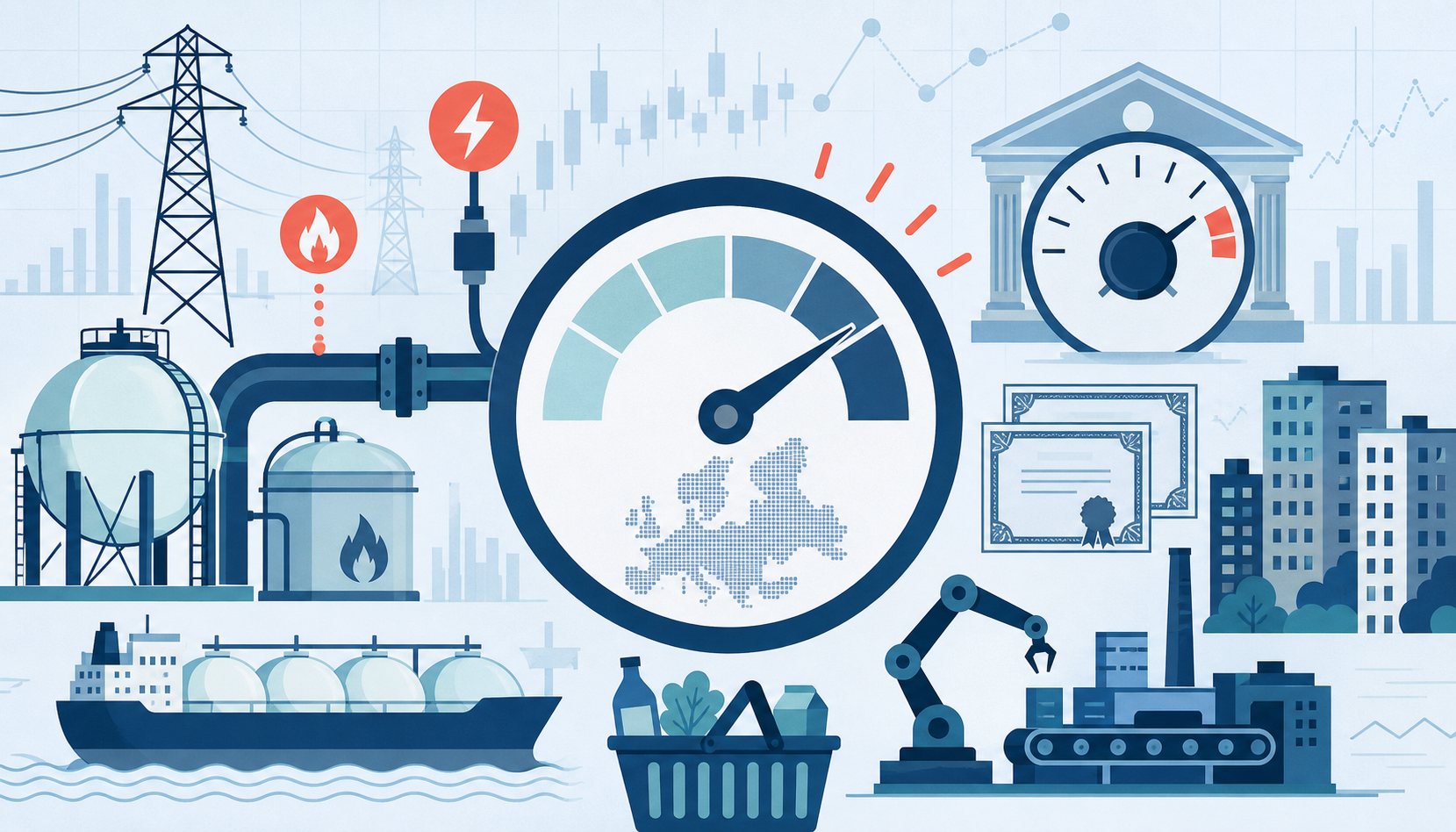
Eurozone inflation accelerated in July as energy costs regained momentum, adding pressure on the European Central Bank to keep borrowing costs restrictive. Annual inflation rose to 2.9% from 2.8% in June, according to Eurostat’s flash estimate.
Energy prices drove the increase. Energy inflation reached 10.0% in July, up from 8.5% in June, and energy prices rose 2.4% during the month. The all-items Harmonised Index of Consumer Prices increased 0.2% from June. Those figures put the headline rate farther above the ECB’s 2% target after the June decline had offered some relief.
Energy widened the gap with underlying inflation
Inflation excluding energy and food held at 2.2%, while the measure that also removes alcohol and tobacco rose to 2.5% from 2.4%. Services inflation edged up to 3.3% from 3.2%. Non-energy industrial goods inflation increased to 0.9% from 0.7%.
Food prices moved in the other direction. Food, alcohol and tobacco inflation fell to 1.2% from 1.5%, and unprocessed food inflation dropped to 2.5% from 3.1%. The split gives policymakers a clear diagnosis: the July rebound came from energy and a small rise in services, while broad goods and food pressures remained contained.
Energy carries a weight of about 9% in the eurozone inflation basket, yet its 10% annual increase can pass through to transport, industrial inputs and household utility bills. Producers can absorb part of the shock through margins or pass it to customers. The second route would lift core inflation with a lag and keep policy tight for longer.
The ECB has already raised its guard
The Governing Council raised its three policy rates by 25 basis points in June as the Middle East conflict pushed energy costs higher. On July 23, the ECB kept rates unchanged, leaving the deposit facility at 2.25%, the main refinancing rate at 2.40% and the marginal lending rate at 2.65%.
The ECB said the full inflation effect of the energy shock had yet to appear and promised to watch indirect effects, wage setting and inflation expectations. Its June staff projections put headline inflation at 3.0% in 2026, 2.3% in 2027 and 2.0% in 2028. July’s reading fits that near-term profile and weakens the case for an early rate cut.
Underlying inflation gives the bank some room to wait. The 2.2% rate excluding energy and food remains close to target, and the ECB’s wage tracker points to moderate wage growth. A new tightening cycle would require stronger evidence that energy costs are spreading into services, wages and longer-term expectations.
National inflation rates remain far apart
The common headline masks large differences across the 21-member currency union. Lithuania recorded 5.6% inflation, Bulgaria 4.1% and Cyprus 4.0%. Spain reached 3.8%. Estonia stood at 2.0%, while France reported 2.4% and Germany 2.8%.
One interest rate must cover each of those economies. Countries with inflation near 4% face a tighter real-income squeeze, while a policy rate calibrated to the eurozone average may feel too loose for them. Economies near 2% face the opposite problem if the ECB responds to the bloc’s energy shock with higher rates.
This divergence also affects sovereign risk. Governments may subsidize electricity or fuel to protect households, adding fiscal costs and obscuring the underlying price signal. The ECB has urged governments to keep energy support temporary and targeted. Broad subsidies would increase borrowing needs at a time when higher policy rates have already raised debt-service costs.
Credit risks build through margins and refinancing
Energy-intensive companies carry the first layer of credit risk. Chemicals, metals, transport and heavy manufacturing face higher input bills. Firms with pricing power can defend cash flow; companies tied to fixed-price contracts may lose margin before they can reset prices. Smaller borrowers often have less access to hedging and longer-term energy contracts.
Households face a slower transmission. Higher utility and transport costs reduce money available for other purchases. The ECB reported that mortgage demand had weakened because of lower confidence and higher rates. Another period of energy-led inflation could prolong that slowdown and weaken consumer-facing businesses.
Banks benefit from wider lending margins when policy rates stay high, but credit quality can offset that gain. Lenders should watch arrears among variable-rate mortgage borrowers and energy-sensitive companies. A delayed easing cycle would also raise refinancing costs for commercial property and leveraged corporate issuers.
Analyst’s View
The July report supports a hold at the ECB’s next meeting. Headline inflation moved higher, yet core inflation held at 2.2%. That combination gives officials time to see whether the energy shock spreads into wages and services.
Bond investors face two competing forces. Persistent inflation can keep short-dated yields high, while weaker consumption and investment can support longer maturities. The yield curve will respond to evidence about the duration of the energy shock rather than one monthly headline.
Equity investors may favor companies with low energy intensity, strong balance sheets and the ability to reset prices. Banks can retain income support from higher rates, though asset quality deserves more attention. Utilities and energy suppliers face policy risk if governments expand price controls or windfall taxes.
The euro could gain support from a longer period of restrictive ECB policy. Growth damage from high energy costs would work against that trade. Investors should separate the first-round energy increase from broader inflation measures and watch country-level fiscal responses for signs of wider sovereign spread risk.
Eurostat will publish complete July inflation data on August 19. That release will add national details and confirmed component contributions. The ECB will then have a firmer basis for deciding whether July marked a temporary energy bump or the start of a broader inflation problem.