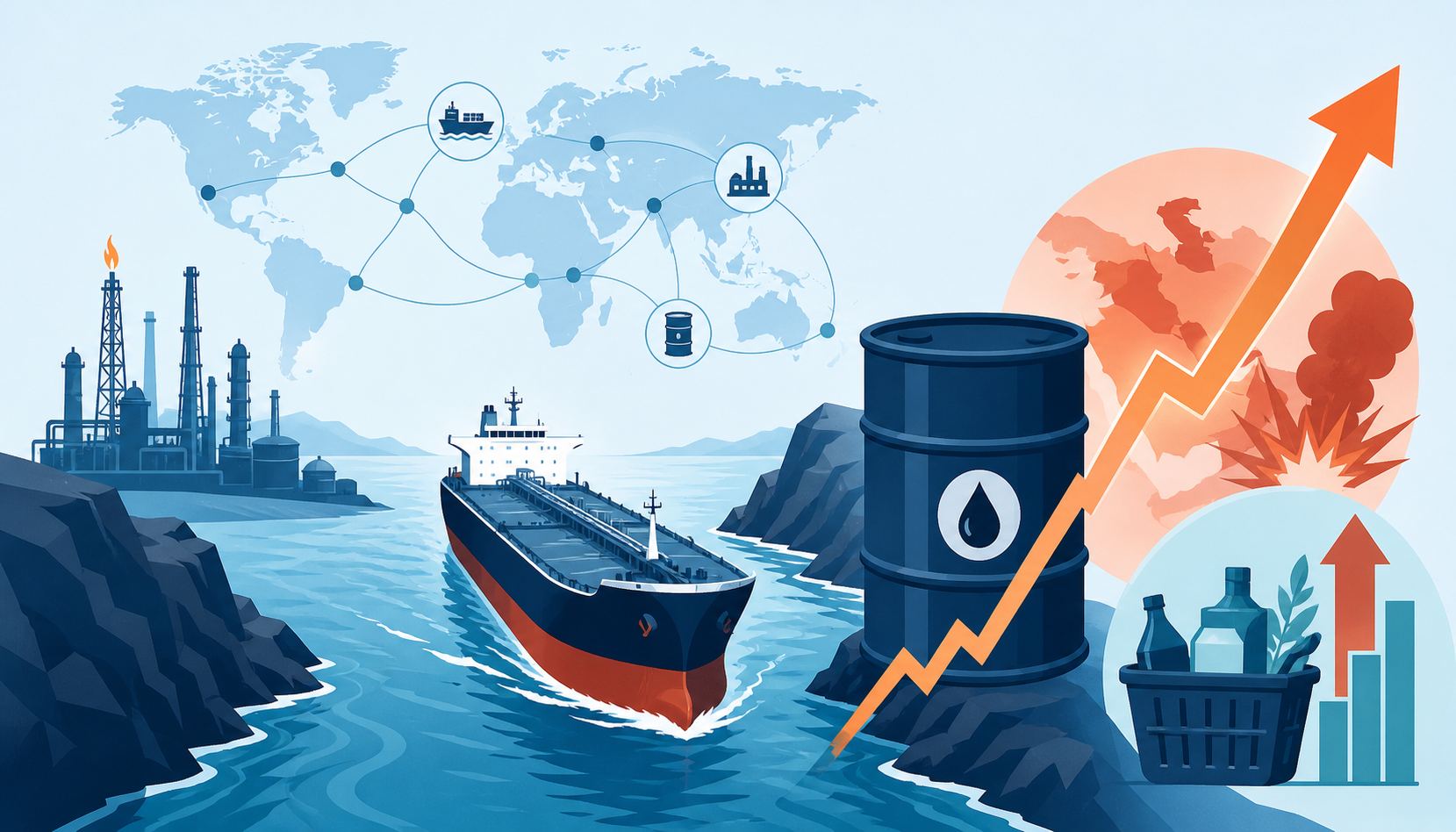
Oil prices rose again on August 20 after President Donald Trump issued fresh threats toward Iran, adding a new layer of uncertainty to an energy market already disrupted by conflict around the Strait of Hormuz. AP reported that Brent crude gained 2.3% during the session. The market response was larger than a single day’s price move: investors were reassessing whether an already constrained flow of crude and refined products could face a longer interruption.
The International Energy Agency’s August Oil Market Report supplies the broader context. It forecasts that world oil demand will decline by 1.6 million barrels per day in 2026 as high fuel prices and the Hormuz disruption weigh on consumption. Yet the report also projects global supply to fall by 4.3 million barrels per day on average this year, after Gulf output and Russian refining capacity were disrupted. That combination puts the global economy in a difficult position: weak demand does not necessarily bring lower fuel prices when supply and transport are constrained.
A market shaped by physical flows
The immediate catalyst on August 20 was geopolitical escalation. The deeper economic question is the reliability of the physical supply chain. The Strait of Hormuz has been a critical route for crude oil, liquefied natural gas and petroleum products. When ships, terminals and tankers face disruption, the effect is felt in freight, insurance, refinery planning and the availability of diesel, jet fuel and gasoline.
The IEA reported that global oil supply rose to 101.5 million barrels per day in July but remained 6.3 million barrels per day below a year earlier. Gulf production was still 8.3 million barrels per day below its pre-war level. Its assessment also said seaborne trade and refinery throughput had been damaged by Middle East product-export disruptions and attacks on Russian refineries. These figures explain why headline crude prices alone do not capture the pressure facing consumers and businesses.
Refined products are especially important. A company does not run a truck fleet or an airline on crude oil. It pays for diesel and jet fuel. The IEA said diesel exports from Russia, the Middle East and Asia were 1.3 million barrels per day lower year on year, equal to about one-fifth of global seaborne diesel trade. Jet-fuel exports from those regions were down by roughly one-third of global trade. That creates a direct channel from a regional security shock to transport costs in Europe, Asia and the Americas.
Why inflation risk returned
Higher oil prices raise consumer-price inflation first through fuel bills and then through production and transport costs. Central banks generally look through temporary commodity-price shocks when they do not alter wider wage and price-setting behaviour. The risk increases when the shock lasts long enough to affect inflation expectations, service prices and firms’ cost assumptions.
This is a harder environment for policy makers because growth is slowing. The IMF’s July 2026 World Economic Outlook update projected global growth of 3.0% this year and linked a weaker outlook to the energy shock. Its baseline assumed an eventual reopening of the Strait of Hormuz and a return of commerce toward normal conditions. Fresh threats and a rise in crude prices therefore matter because they test an assumption behind the outlook rather than simply changing a market quotation.
The policy challenge differs across countries. Economies that import most of their oil and gas face a deterioration in their terms of trade: more national income must be spent on energy imports. Countries with fuel subsidies may see fiscal costs rise. Central banks in those countries may confront a choice between supporting activity and preventing a temporary energy shock from feeding into persistent inflation. Oil exporters benefit from higher prices, but disruptions to their own production or shipping can limit that benefit.
The bond-market link
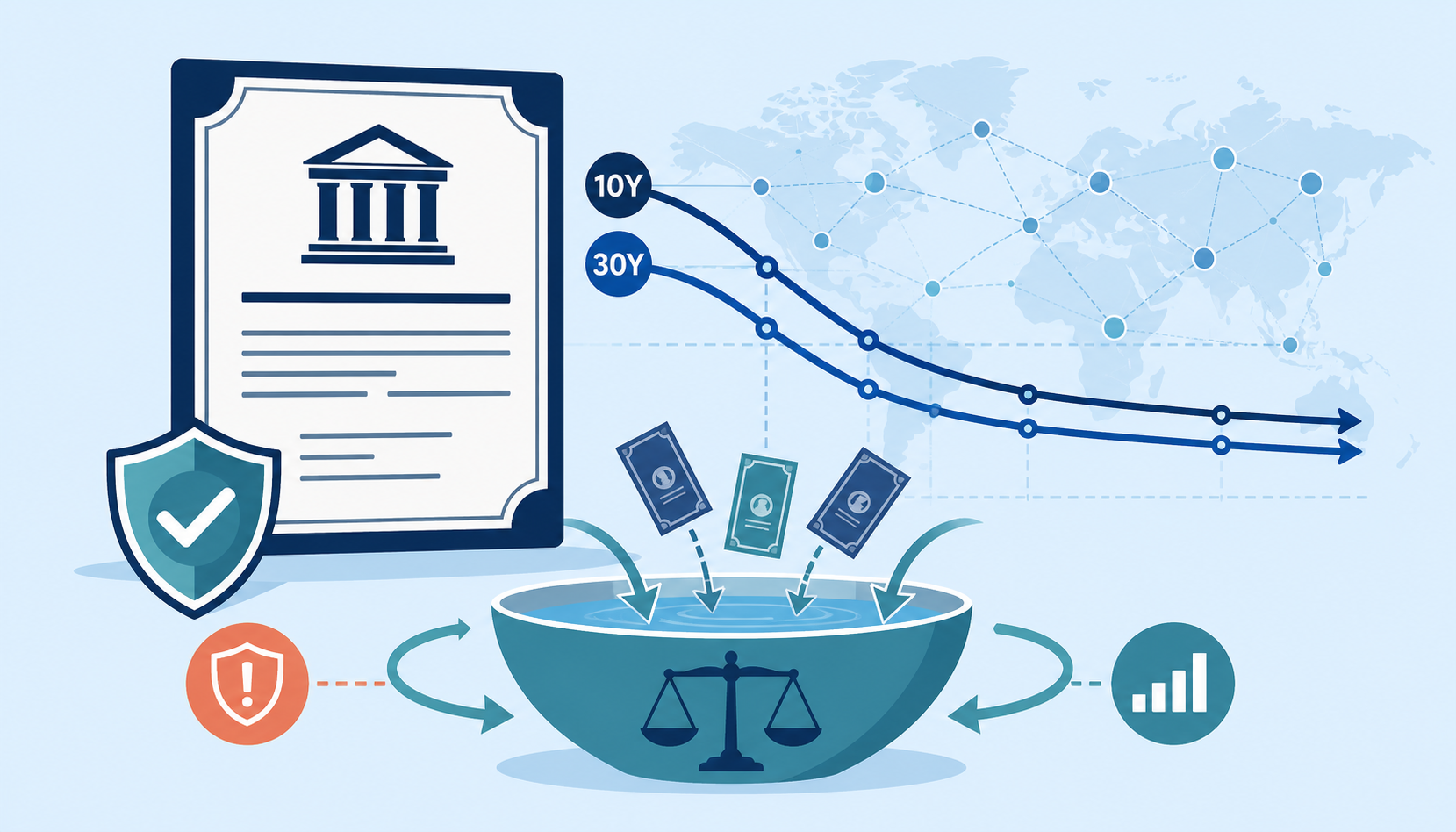
The August 20 oil move also landed while government bond markets were already sensitive to inflation and fiscal concerns. Higher energy prices can lead investors to demand greater compensation for expected inflation and for holding long-duration bonds. Rising sovereign yields then raise benchmark borrowing costs for households, companies and governments.
That link has been visible this week. Reuters reported that European shares were muted as higher oil prices offset support from a recovery in global bonds after the U.S. Treasury moved to increase purchases of long-dated securities. The Treasury measure can support secondary-market liquidity, yet it cannot determine the future path of energy prices or inflation. The two stories belong together: an oil shock can push yields higher, while debt managers and central banks work to keep the market’s response orderly.
For emerging markets, the combination of expensive energy and high dollar borrowing costs is particularly demanding. Oil imports increase external financing needs while tighter global financial conditions make that financing costlier. Governments with large fuel subsidies face additional pressure on budgets. Firms with dollar debt and heavy energy use can see margins squeezed from both directions.
What the IEA data say about buffers
Emergency inventories and alternative supply routes have softened the shock, but they are finite buffers. The IEA said observed global oil inventories fell by 69 million barrels in July and stood below 7.9 billion barrels at month-end, down 410 million barrels since the start of the war. Oil on water accounted for much of the latest draw, underscoring the importance of shipping routes and tanker availability.
The agency expects a global oil-market deficit of 1.8 million barrels per day in the third quarter, more than double its previous estimate. It expects supply and demand conditions to improve next year, but that forecast rests on a recovery in production and transport. The nearer-term picture remains vulnerable to further attacks, diplomatic setbacks or refinery outages.
Price volatility is another cost. The IEA said benchmark crude traded through a range of nearly $40 a barrel in July. Businesses can manage a high and predictable energy price more easily than a price that changes sharply with each diplomatic headline. Volatility complicates hedging, inventory decisions and investment plans. It also widens the gap between firms that can secure fuel and credit on favourable terms and firms that cannot.
Analyst’s View
For credit risk, lenders should focus on transport, chemicals, airlines and energy-intensive manufacturers. Their exposure depends on fuel hedges, pricing power, working-capital needs and access to short-term funding. High crude prices do not affect every borrower equally; the availability and cost of refined products can be more decisive.
For sovereign risk, the important measures are the import bill, foreign-exchange reserves, subsidy commitments and the maturity of public debt. A country that imports oil and rolls over large amounts of foreign-currency debt faces a more difficult adjustment than an exporter with fiscal buffers.
For market positioning, the near-term indicators are physical: tanker movements, refinery runs, product cracks, inventory draws and verified diplomatic developments. The IEA’s data show that the current problem is not only sentiment. Supply, refining and trade flows remain impaired.
The August 20 price rise should therefore be read as a warning about a broader inflation channel. The world economy can absorb a brief spike in oil prices. A prolonged disruption to Gulf transport and refined-product trade would make the balance between growth and inflation far more difficult for governments, central banks and investors.