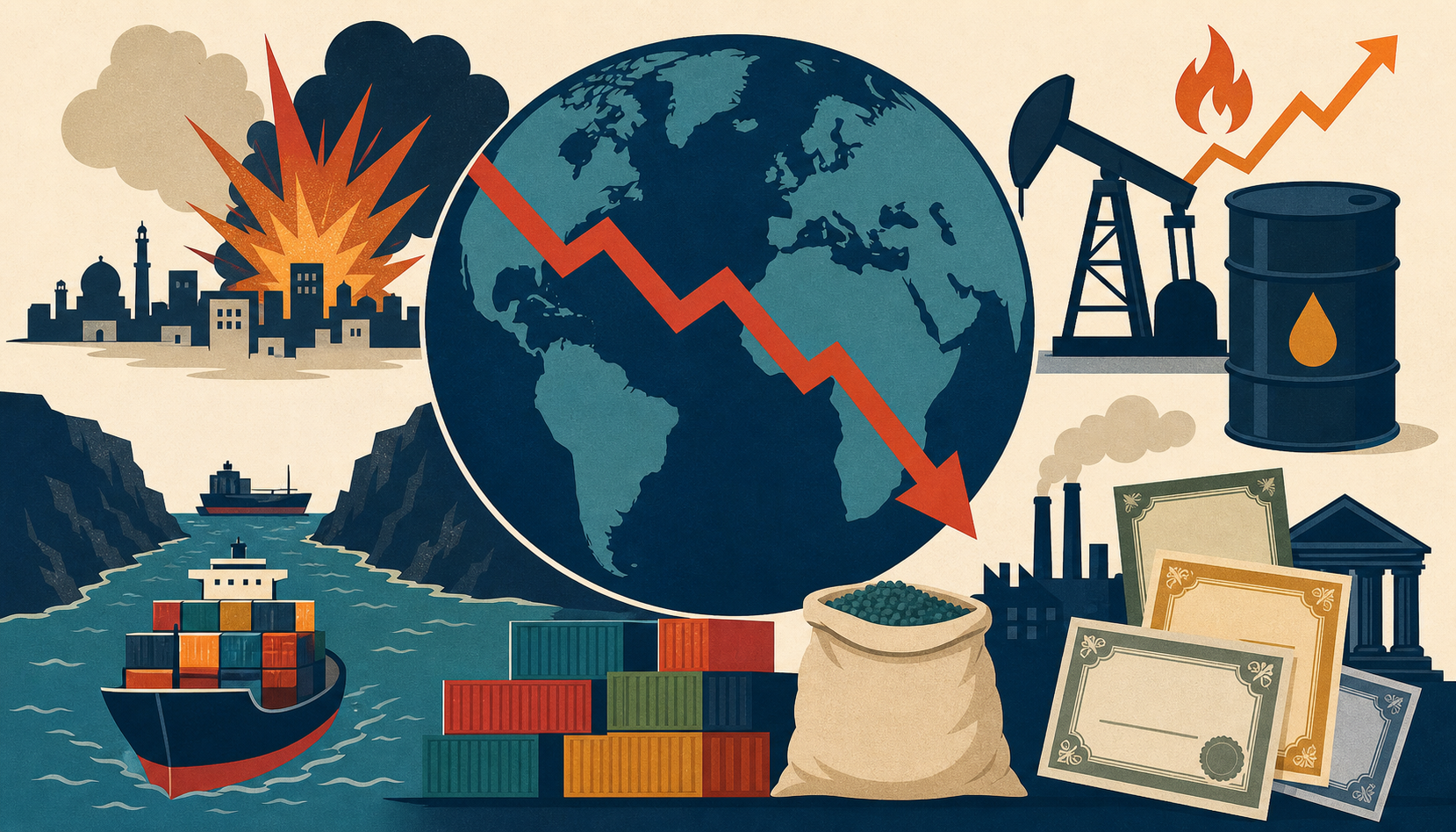
The World Bank has warned that global growth could fall to 1.3% in 2026 if the Middle East war causes deeper energy supply disruptions and financial stress. The figure describes a severe downside scenario. The institution’s central forecast remains 2.5% growth this year, down from 2.9% in 2025, according to its June Global Economic Prospects assessment.
The distinction matters for investors and policymakers. The baseline assumes that the worst energy disruptions ease and that trade starts to recover. The 1.3% scenario combines a prolonged supply shock with pressure in financial markets. Under that case, the World Bank expects global inflation to reach 4.4%, against 4.0% in its baseline.
A tail risk built around energy and finance
The Strait of Hormuz sits at the center of the World Bank’s risk case. The Bank projects Brent crude to average $94 a barrel in 2026, 36% above its 2025 level, if the worst disruption abates. Its scenario analysis shows that an average Brent price of $115 could reduce global growth by 0.4 percentage point. Financial stress linked to higher oil prices could push the loss to 1.2 percentage points, taking growth from the 2.5% baseline to about 1.3%.
Recent IMF analysis of the oil market explains how energy buffers muted the initial price spike. The closure of Hormuz removed about 20 million barrels a day of crude and refined products from normal routes, equal to one-fifth of global consumption. Producers redirected some supply, non-Gulf output rose, and buyers drew down inventories. By the end of May, more than 1.1 billion barrels had failed to reach the market.
Those buffers now offer less protection. The IMF estimates that inventories covered most of a four-million-barrel-a-day market deficit from March through May. A renewed disruption would hit a system with lower stocks and fewer spare routing options. Diesel and jet fuel face added pressure because Gulf refineries supply about 10% of the global market for those products.
The shock reaches far beyond oil
Energy costs pass into freight, manufacturing, electricity and food. The World Bank expects fertilizer prices to rise, increasing costs for farmers and food importers. Higher consumer prices can force central banks to hold rates up even as output weakens. That combination raises refinancing costs for governments and companies while reducing household demand.
Developing economies carry much of the exposure. The World Bank forecasts their growth at 3.6% in 2026, down from 4.4% in 2025. It expects Gulf economies in the conflict zone to slow from 3.9% growth last year to near zero. Energy-importing countries with small foreign-exchange reserves face pressure through larger import bills, weaker currencies and subsidy costs.
The IMF’s July outlook offers a stronger central forecast of 3.0% global growth for 2026. The IMF credits momentum in the United States and China, including investment linked to artificial intelligence, with offsetting part of the war drag. The difference between the two institutions reflects their assumptions and timing. Both identify renewed conflict, energy disruption and financial repricing as material downside risks.
Credit and sovereign risks move together
For corporate credit, transport, chemicals, airlines and energy-intensive manufacturers face weaker margins unless they can pass higher input costs to customers. Banks in vulnerable importers may see more problem loans as borrowers absorb currency losses and rate pressure. Trade-finance demand can rise at the same time that lenders tighten limits on exposed countries and sectors.
Sovereign risk depends on energy exposure and fiscal room. Importers that cap fuel prices must choose between larger budget deficits and higher prices for consumers. Countries with heavy near-term debt maturities face a second squeeze if inflation keeps global yields high. Oil exporters can gain revenue from higher prices, but damaged infrastructure and blocked shipping can prevent them from realizing that benefit.
The World Bank has made $50 billion to $60 billion available through existing instruments, including $25 billion of pre-arranged financing. It says support could reach $80 billion to $100 billion over 15 months if the conflict and its economic fallout persist. A joint statement from the World Bank, IMF and International Energy Agency called for targeted support and warned that commodity supplies may take time to normalize after shipping resumes.
Analyst’s View
The 1.3% figure should guide stress tests rather than replace the baseline. Investors need to watch physical indicators that connect the two scenarios: Hormuz traffic, Gulf export capacity, commercial and strategic inventories, tanker insurance costs, fertilizer prices and credit spreads in energy-importing economies.
Market positioning should separate producers with secure export routes from those exposed to damaged infrastructure or chokepoints. Importers with credible inflation policy, ample reserves and longer debt maturities have more room to absorb the shock. Weak reserve coverage and large refinancing needs create a faster path from an oil shock to sovereign stress.
The next phase will depend on whether supply routes reopen before inventories reach operational minimums. A durable reopening would reduce oil and freight costs, giving central banks room to focus on growth. Further infrastructure attacks or shipping restrictions would move the World Bank’s tail scenario closer to the center of market pricing.